Styling Guides
Hand Tied Extensions: A Stylist's Guide
Hand tied extensions are the flattest, most seamless way to add length and thickness. A Glendale stylist explains the method, the upkeep, and who they suit.
Hand Tied Extensions: A Stylist's Guide
If you've ever pulled your hair into a ponytail and wished it were twice as thick, hand tied extensions are probably the method you've been reading about. They're the flattest, most seamless way we add length and density in the salon — no glue, no heat, no visible tabs — and they've quietly become the request we hear most from clients across Glendale and Los Angeles. Here's how they actually work, who they suit, and what it's really like to live with them.
What Are Hand Tied Extensions?
A hand tied weft is a curtain of human hair that's been literally sewn by hand into a thin, flexible seam at the top. Because no machine stitching is involved, that seam stays whisper-thin — usually under a millimeter thick — which is why the row lies so flat against your head.
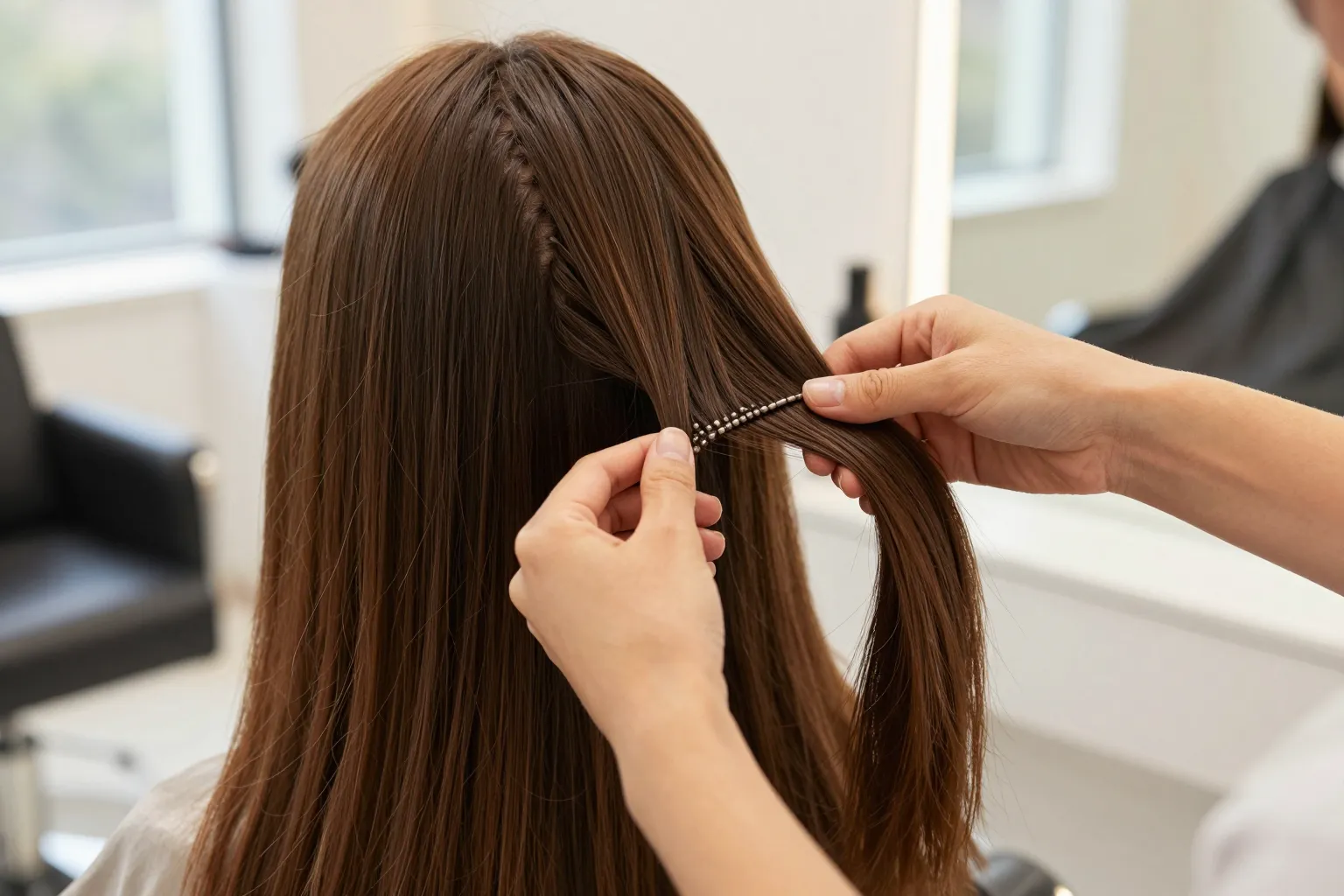
To install them, your stylist creates a horizontal row of small beads (tiny silicone-lined rings) anchored to sections of your own hair. The weft is then stitched onto that beaded track with a needle and thread. You'll hear this called beaded weft extensions or hand tied weft extensions — same technique, different names.
Most clients wear two to four rows depending on the goal. A little extra fullness might need one or two rows; a dramatic length change usually takes three or four.
How They Differ From Other Methods
- Tape-in extensions use adhesive tabs sandwiched around your hair. Faster to install, more affordable, slightly more visible in fine hair.
- Machine wefts (sew-in / traditional weft hair extensions) have a thicker stitched seam and are usually sewn onto a braided track.
- K-tips or I-tips attach in tiny individual strands rather than a continuous row.
- Hand tied extensions sit in the sweet spot: flat like a tape-in, movable like a bead, and reusable for far longer than most methods.
If you're still weighing your options, our breakdown of tape-in hair extensions walks through that method in detail.
Who Hand Tied Extensions Work Best For
This is the part a good consultation exists for. Hand tied wefts are wonderful, but they're not universal.
They tend to be a great fit if you have:
- Medium to fine density hair that lies flat — the thin weft won't create a bump
- Hair that's at least 4–5 inches long, so the row has something to hide behind
- A desire for length, thickness, or both, without the commitment of a permanent change
- The scheduling flexibility for a move-up appointment every 6–8 weeks
They may not be the right call if you:
- Have very fine, fragile, or actively shedding hair — the tension of a row needs healthy anchor points
- Wear a short pixie or very short bob with no coverage above the row
- Are dealing with breakage or damage you haven't addressed yet. Repair first, extensions second. Our guide to getting rid of split ends is a good starting point.
One thing we say often at our hair salon in Glendale: extensions add hair, they don't fix hair. If your ends are compromised, we'd rather do a bond-building treatment and a proper trim before we install anything.
The Appointment: What Actually Happens
1. Consultation and color match
Before anything is installed, we match the extension hair to your existing color — and usually custom-tone the wefts so they blend rather than sit on top of your color. Extension hair is real human hair, so it can be glossed, toned, and deepened. It cannot be lifted safely, so we always match to your darkest desired tone and adjust from there.
2. Sectioning and beading
Your stylist maps out where each row will sit — high enough to be hidden, low enough not to show when you flip your part. Beads are placed and clamped with just enough tension to hold, never enough to pull.
3. Sewing the wefts
The weft is stitched onto the beaded row with a needle and cotton thread. This is the slow part and the part that determines whether your extensions feel invisible or annoying.
4. The cut and blend
This is the step that makes or breaks the whole install. Straight-from-the-package wefts have a blunt, heavy edge. A proper blend cut — point cutting, layering, and softening — is what turns "I'm wearing extensions" into "did you always have that much hair?"
Plan on three to five hours for a full install, depending on the number of rows.
Cost, Upkeep, and Lifespan
Hand tied extensions are an investment in two parts: the hair itself and the labor.
- The hair is a one-time purchase and, cared for properly, can be reused for 9–12 months or longer.
- Move-up appointments happen every 6–8 weeks, when your natural growth has shifted the rows down. Your stylist removes the wefts, re-beads at the scalp, and re-sews the same hair.
- Expect a blend trim at most move-ups to keep the layers current.
Pricing in the Los Angeles area varies a lot with row count and hair length, so the honest answer is that it's quoted at consultation. For a general sense of extension pricing in our area, see our post on how much hair extensions cost in Glendale.
How to Care For Hand Tied Extensions at Home
Good aftercare is genuinely the difference between hair that lasts a year and hair that lasts three months.
- Brush twice a day, minimum. Use a loop brush or a soft extension brush. Hold the row with one hand and brush from the ends upward.
- Wash 2–3 times a week, not daily. Focus shampoo on the scalp, conditioner from the rows down.
- Skip sulfates and heavy silicones. They strip the hair and slip the beads.
- Never sleep on wet hair. Wet hair plus a row plus friction equals matting at the seam. Rough-dry the rows before bed, always.
- Braid it at night. A loose braid or two prevents overnight tangling.
- Heat protect, every time. Extension hair has no scalp feeding it moisture, so it can't recover from heat damage the way your own hair does.
- Keep oils and conditioner off the beads. Slippery beads slide.
If you're already in a solid routine, our scalp care routine for healthier hair pairs nicely with extension wear — a clean, balanced scalp keeps the rows comfortable.
Frequently Asked Questions
Do hand tied extensions damage your hair?
Installed correctly and maintained on schedule, they shouldn't. Damage almost always comes from one of three things: rows that are too heavy for the hair supporting them, tension that's too tight, or move-ups that get pushed months past due. Choose a stylist who is honest about how much hair your hair can carry, and go in for your move-ups.
How long do hand tied extensions last?
The install lasts 6–8 weeks before it needs a move-up. The hair itself typically lasts 9–12 months with good care, and often longer if you're gentle with heat.
Are hand tied extensions better than tape-ins?
Neither is universally better — they solve slightly different problems. Hand tied wefts lie flatter, move more naturally, and last longer, but they cost more upfront and take longer to install. Tape-ins are quicker and more budget-friendly, and they're excellent for adding a bit of length or a few highlights. Density and lifestyle decide it.
Can you color hand tied extensions?
You can tone, gloss, and darken them. You cannot lift them safely — bleach on extension hair is unpredictable and usually ruins the cuticle. This is why matching correctly at the start matters so much.
Are hand tied extensions good for fine hair?
Often, yes — the thin weft is one of the least detectable options out there. But "fine" and "sparse" aren't the same thing. Fine hair with good density usually does beautifully. Fine hair that's also thinning may need fewer rows, shorter wefts, or a different method entirely.
Ready to See What Yours Would Look Like?
Every good extension result starts with an honest consultation — your density, your goals, your budget, and how much time you actually want to spend on your hair each morning. Whether you're coming from Eagle Rock, Burbank, Pasadena, or right here in Glendale, we'll walk you through whether hand tied extensions are the right fit, or whether another method would serve you better.
Book your extension consultation at The Look Hair Salon and let's talk it through.
Filed under
Written by
The Look Hair Salon
Stylist at The Look Hair Salon — bringing this story to you from our chairs in Glendale.
Ready for your next look?
Pick a stylist + time online. We'll handle the rest.
Walk-ins welcome, but online bookings get our fastest confirmation.