Styling Guides
Face Framing Layers: A Stylist's Guide
Face framing layers are the shortest pieces around your face - and the biggest payoff in any haircut. A Glendale stylist explains placement, styling, and upkeep.
Face Framing Layers: A Stylist's Guide
If you've ever left the salon with a great haircut that somehow still felt flat around your face, face framing layers are almost certainly what was missing. They're the shortest pieces in your cut — the ones that fall along your cheekbones and jaw — and they do more for how a haircut reads than any other section of your hair. Here's how they work, who they suit, and exactly how to ask for them.
What Are Face Framing Layers?
Face framing layers are shorter, angled pieces cut specifically around the perimeter of your face, blended back into the rest of your length. Unlike traditional layers — which are cut throughout the whole head to remove weight and add movement — face framing layers are a targeted section. The rest of your hair can stay one solid length while the front does all the work.
Think of them as a spotlight. They pull the eye toward your cheekbones, soften a strong jawline, and give your hair a starting point instead of just hanging there. That's why a face framing haircut is one of the most requested cuts at our hair salon in Glendale — it's a small change with a disproportionate payoff.
Face Framing Layers vs. Regular Layers
- Regular layers are cut all over. They remove bulk, add volume, and change the overall shape of your hair.
- Face framing layers are concentrated at the front, usually starting somewhere between the chin and collarbone.
- You can absolutely have both. Long layers with face framing is the most common combination we cut, and it's what gives you movement through the length and definition at the front.
Who Face Framing Layers Suit Best
Honestly? Almost everyone. But the placement changes depending on your face shape and hair type.
Round faces. Start the shortest piece below the chin. Anything that hits at the widest part of your face adds width. A longer, sharper angle creates a vertical line that elongates instead.
Square or strong jawlines. Soft, wispy pieces beginning at the cheekbone break up the angle of the jaw without hiding it.
Long or oval faces. You have the most freedom. Layers starting at the cheekbone or even just below the eye add horizontal softness.
Heart-shaped faces. Keeping the shortest layer at chin level or lower balances a wider forehead against a narrower chin.
For fine hair, fewer layers cut with more precision is the move — over-layering thin hair makes the ends look sparse. For thick or curly hair, layers actually remove weight and let the front sit properly instead of pushing outward.
Face Framing Layers for Long Hair
This is the version most people picture, and for good reason. Face framing layers on long hair give you all the drama with none of the commitment — your length stays intact, and you can always tuck the front behind your ears if you're not feeling it.
A few directions we cut regularly:
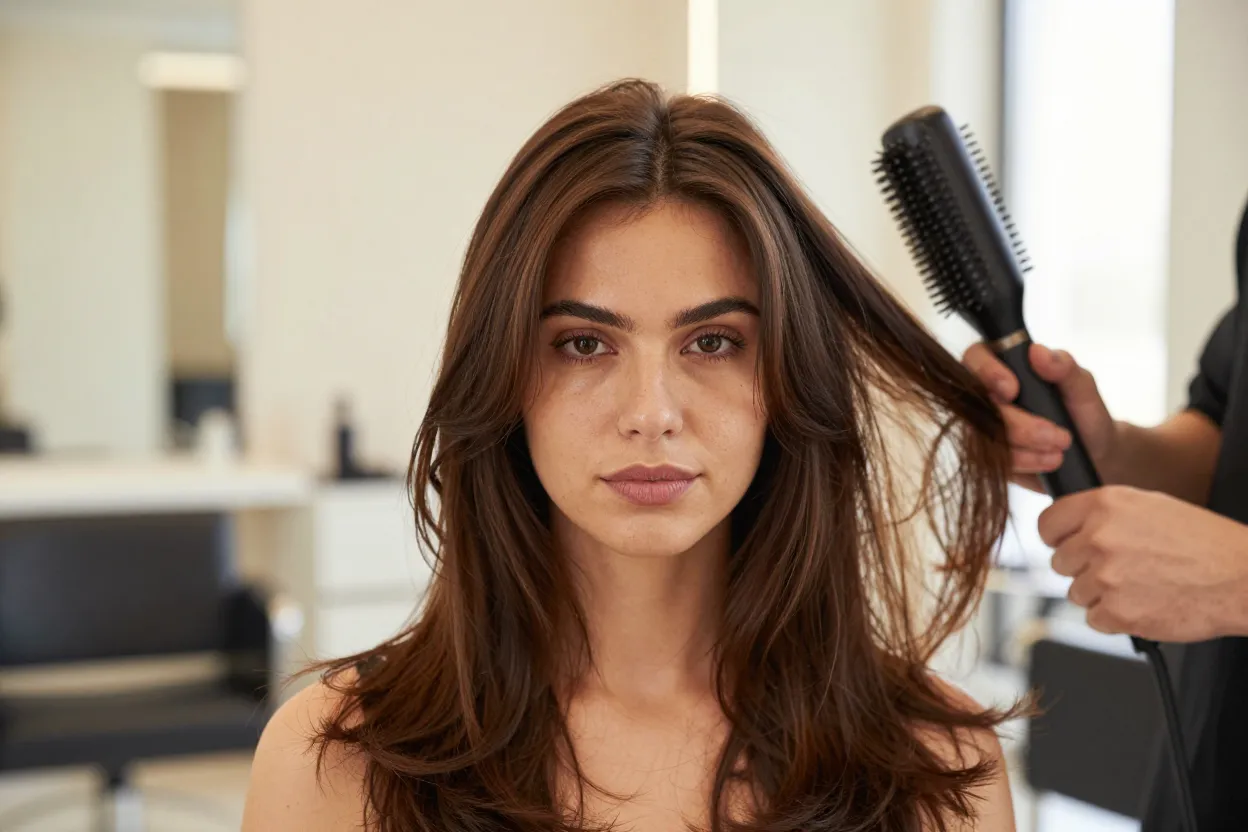
- The soft cascade. The shortest piece hits around the collarbone, angling gently into the length. Barely-there, extremely low maintenance.
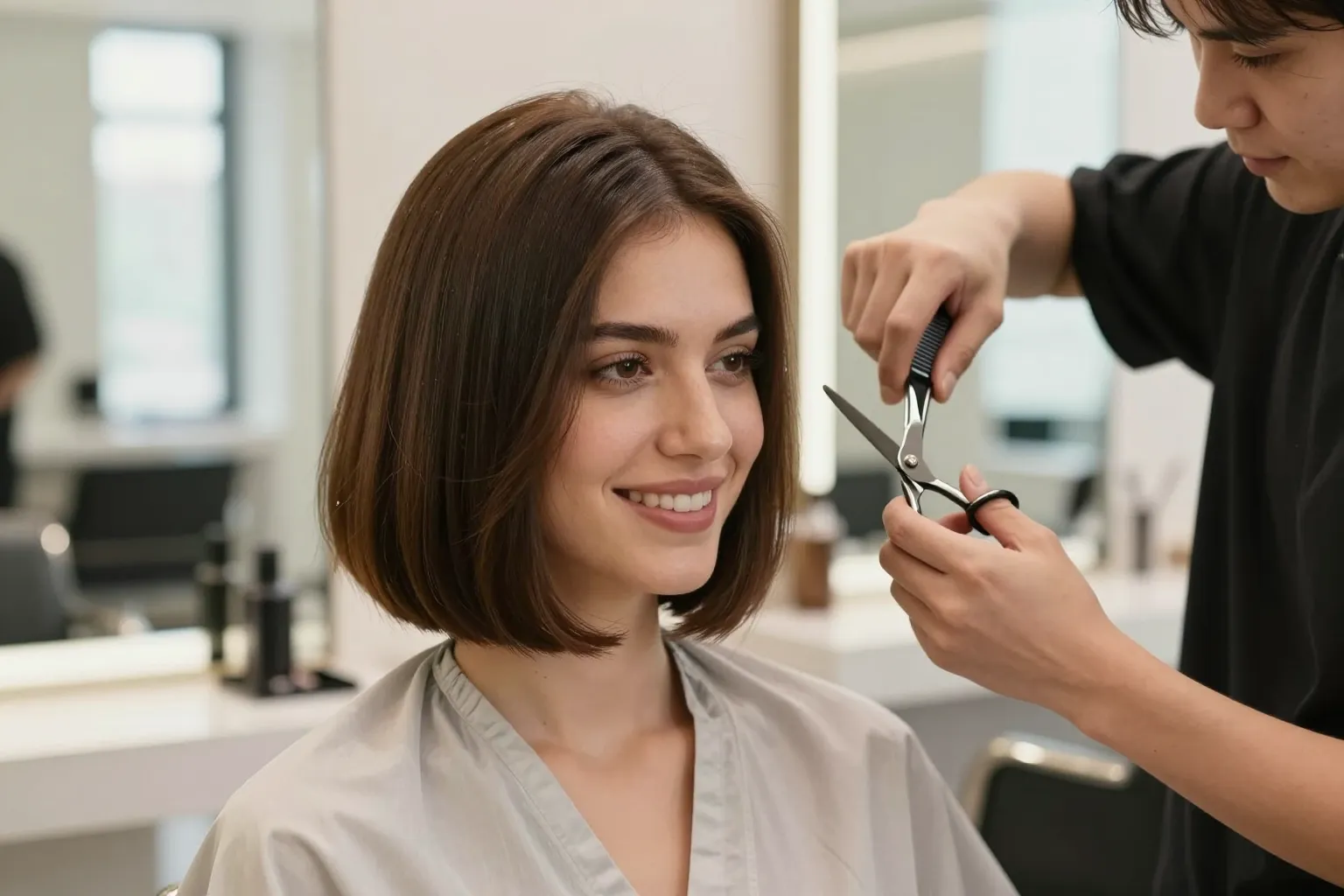
- The sharp frame. Shortest piece at the chin or jaw, cut at a steeper angle. More noticeable, more editorial, needs a bit more styling.
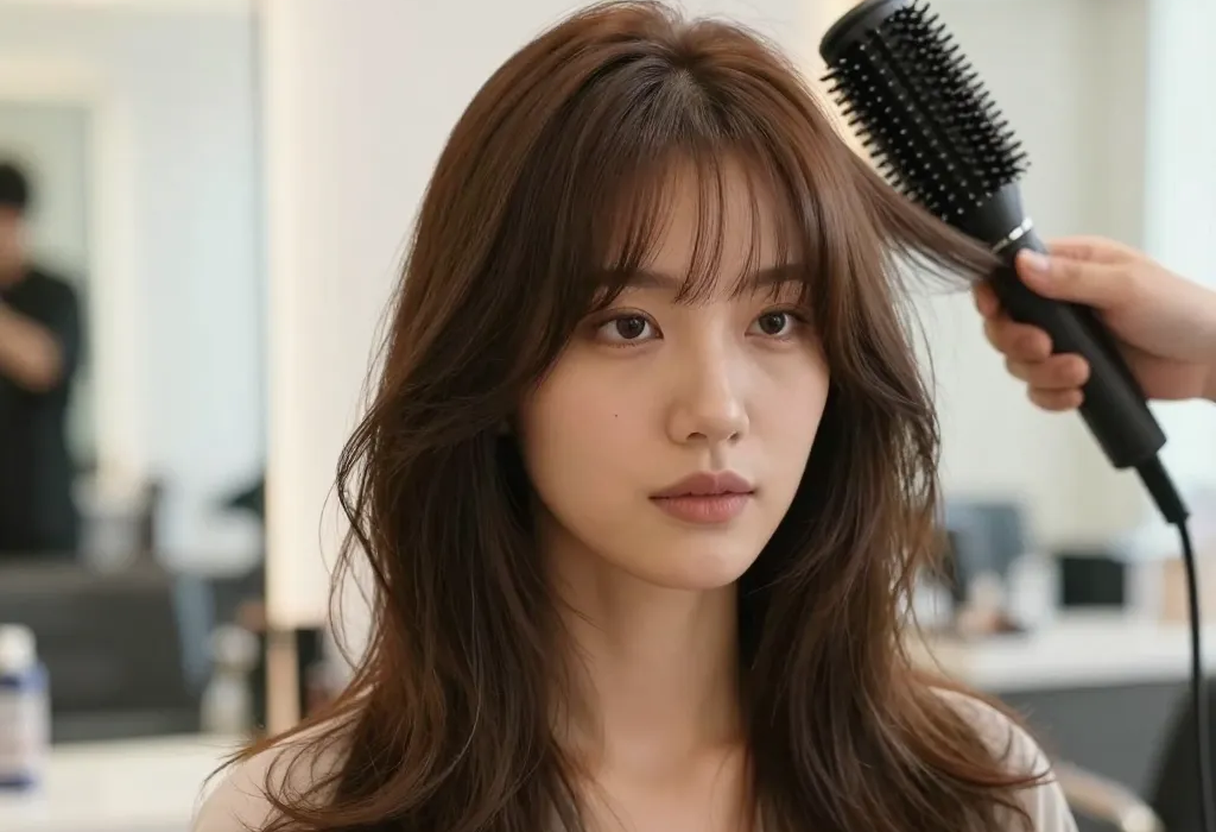
- The curtain blend. The front pieces are cut short enough to sweep away from a center part — where face framing bangs and layers start to overlap. If you want a true fringe rather than a blend, our guide to curtain bangs with layers breaks down that distinction in detail.
- The extended money-piece cut. Long face framing layers paired with brighter color at the front. The cut creates the shape; the color makes it pop.
How to Ask for Face Framing Layers
Bring photos — always. But also come with vocabulary, because "face framing layers" means slightly different things to different stylists. Be ready to answer:
- Where should the shortest piece land? Point to it on yourself. Chin, cheekbone, collarbone.
- How soft or sharp? A blunt angle looks graphic. A point-cut, feathered edge looks lived-in.
- How much length overall? Layers and a length change are two separate conversations.
- Center part or side part? Face framing is cut around your natural part. If you're planning to switch, say so before we start.
One thing worth saying out loud: be honest about your styling routine. A steep, sharp frame looks incredible blown out and slightly awkward air-dried. If you're a wash-and-go person from Eagle Rock or Silver Lake who genuinely will not pick up a round brush, we'll cut you a softer angle that dries beautifully on its own.
How to Style Face Framing Layers
The good news is that a well-cut frame does most of the work. Still, a few techniques make a real difference:
- Blow-dry the front away from your face. Use a round brush or just your fingers, directing the front pieces back and up. This is the single highest-impact thing you can do.
- Overdirect at the root. Pull the front section straight up while drying to build lift where the layers begin.
- Use a light texture spray, not a heavy cream. Weight is the enemy of movement. Bold rule of thumb: if your face framing pieces are sticking to your cheeks, your product is too heavy.
- Curl away from your face. Wrap the front sections in the opposite direction from your face — it opens everything up instead of closing it in.
- Flat iron with a slight bend. A gentle C-shape at the ends reads far more polished than a poker-straight edge.
Upkeep and Maintenance
Face framing layers grow out gracefully, which is part of the appeal. That said:
- Soft, long layers: a refresh every 12–16 weeks is plenty.
- Sharp, chin-length frames: every 8–10 weeks to keep the angle crisp.
- Layers paired with a fringe: every 6–8 weeks, mostly to keep the bangs honest.
Between appointments, do not trim the front yourself. We say this with love. Face framing layers are cut with tension, elevation, and a specific angle — and hair pulled forward always cuts shorter than you think. It's the most common repair we see at our Glendale salon, and it's an easy one to avoid.
Frequently Asked Questions
Are face framing layers and curtain bangs the same thing? No, though they're cousins. Curtain bangs are a true fringe that reaches the eyebrow or cheekbone and parts down the middle. Face framing layers start longer — usually at the cheekbone or below — and blend into your length rather than reading as bangs.
Are face framing layers good for thin hair? Yes, when cut conservatively. The trick is fewer layers placed higher, so you create the illusion of shape without thinning out your ends. A skilled stylist will cut into the interior rather than removing bulk from the perimeter.
Will face framing layers make my hair look shorter? The front will be shorter — that's the point — but your overall length stays exactly where it was. Most people find their hair actually looks fuller because the shape has definition instead of hanging in one flat line.
How long does the appointment take? Adding face framing to an existing cut typically takes 30–45 minutes. A full haircut with layers runs closer to an hour. Pairing it with color will extend things considerably — ask when you book so we can schedule properly.
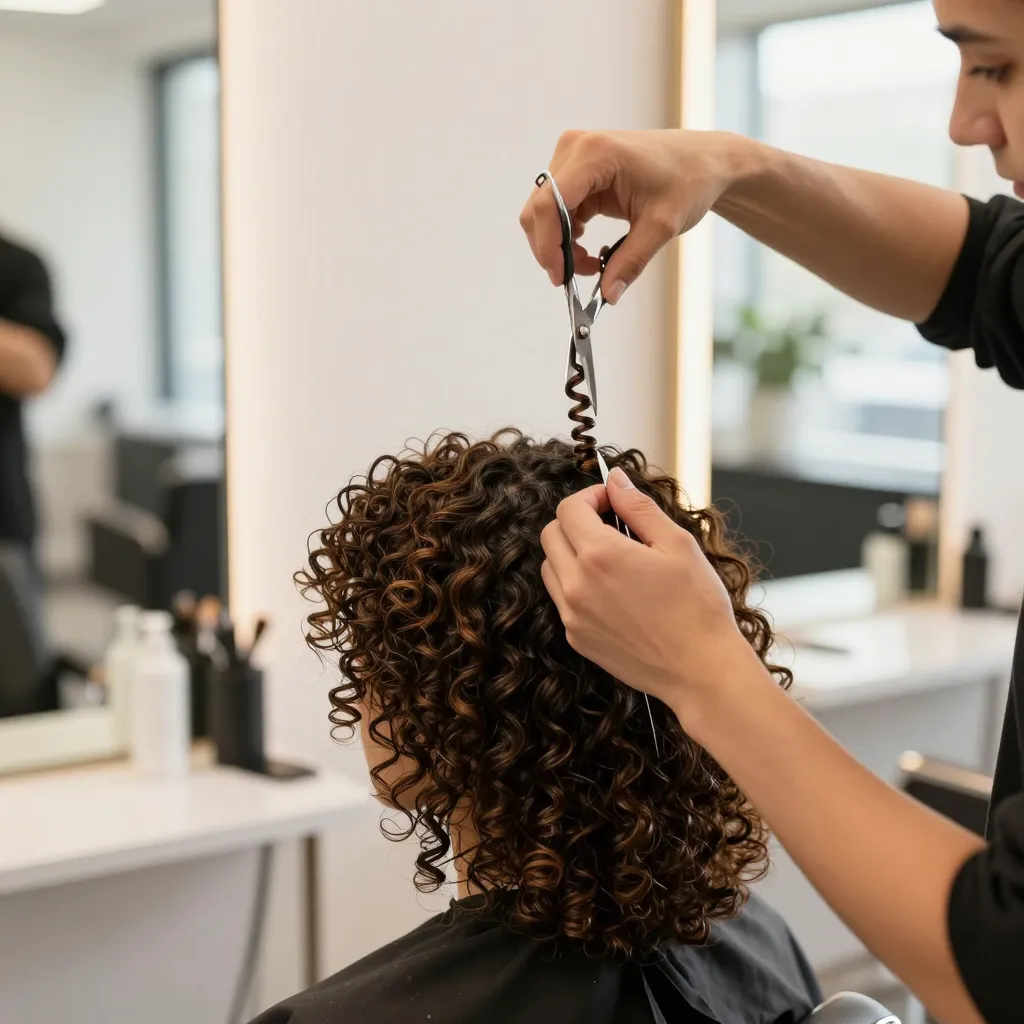
Can I get face framing layers on curly hair? Absolutely, and they're gorgeous on curls — but they should be cut dry, curl by curl, so the placement lands where the curl actually falls. Wet-cutting curly face framing layers is how people end up with an accidental triangle.
Ready for a Frame That Actually Fits You?
The difference between face framing layers that transform your hair and ones that just kind of sit there comes down to placement — where the shortest piece starts, how steep the angle is, and how it's blended into your length. That's a conversation, not a formula.
Our stylists cut face framing layers for clients across Glendale, Burbank, Pasadena, and greater Los Angeles every week, and we'll always start by looking at your hair, your face, and what your mornings actually look like. Book your appointment and let's find the right frame for you.
Filed under
Written by
The Look Hair Salon
Stylist at The Look Hair Salon — bringing this story to you from our chairs in Glendale.
Ready for your next look?
Pick a stylist + time online. We'll handle the rest.
Walk-ins welcome, but online bookings get our fastest confirmation.