Hair Care Tips
Deep Conditioning Treatment: A Stylist's Guide
A deep conditioning treatment puts moisture back into dry, rough hair. A Glendale stylist explains how it works, who needs it and how often to book one.
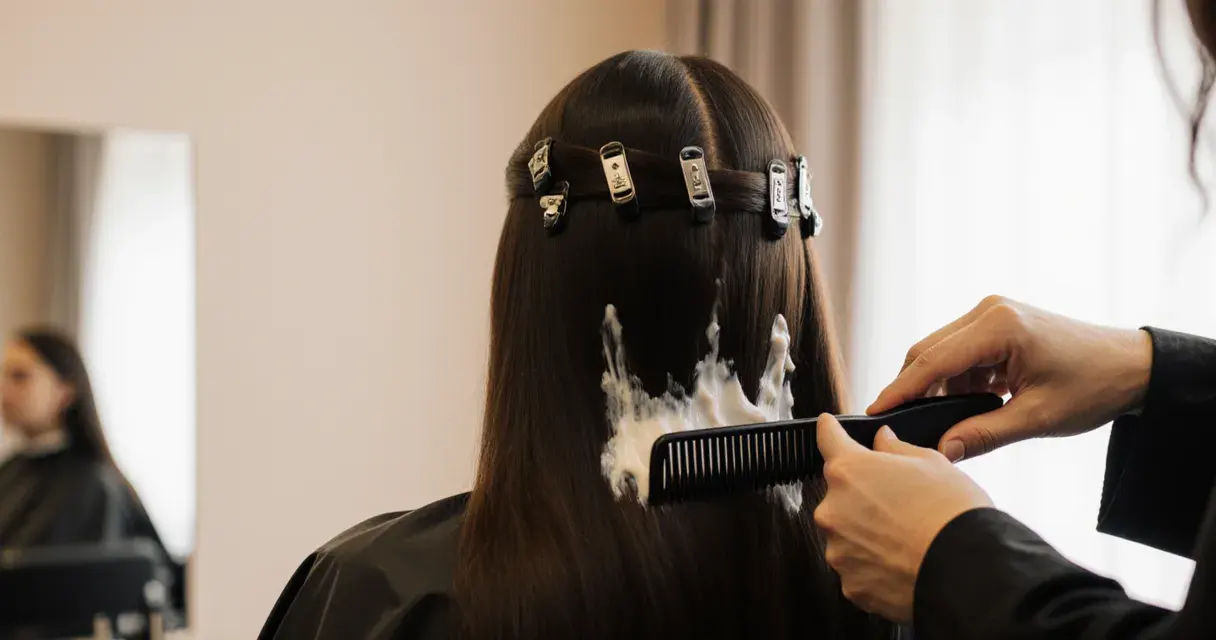
A deep conditioning treatment is a concentrated mask that sits on your hair long enough to soften it, smooth the cuticle and put back the moisture that washing, heat and color take out. If your hair feels rough, tangles the moment it dries, or has lost its shine even though you use conditioner every wash, this is usually the first thing we reach for at our salon in Glendale.
It is not a cure for everything. Deep conditioning fixes dryness. It does not rebuild broken bonds or glue split ends back together, and knowing the difference is what gets you a result that lasts longer than one wash.
What Deep Conditioning Actually Does
Your daily conditioner is built to work in a minute or two. It coats the surface, helps the comb glide, and rinses away. A deep conditioner is thicker, richer in oils, butters and humectants, and is left on for much longer, often with gentle heat.
That extra time and warmth matter. Heat lifts the cuticle slightly, so the conditioning ingredients settle into the outer layers of the hair instead of sitting on top. When the hair cools and the cuticle lies flat again, you get three things you can feel:
- Softness. The strand bends instead of snapping when you run your fingers through it.
- Slip. Tangles come out with far less pulling, which means less breakage at the brush.
- Shine. A flat cuticle reflects light. A rough one scatters it.
Deep Conditioning vs. Protein vs. Bond Repair
These three get lumped together, and choosing the wrong one is the most common reason a treatment "didn't work."
- Deep conditioning adds moisture. Best for hair that feels dry, stiff, frizzy or straw-like.
- Protein adds structure. Best for hair that feels mushy, overly stretchy or limp after bleach. We cover it in our protein treatment guide.
- Bond repair works inside the strand. Best for hair weakened by lightening or repeated chemical services.
A quick test you can do at home: take a single wet strand and stretch it gently. If it barely stretches and snaps, it needs moisture. If it stretches a long way and does not spring back, it needs protein. Many heads of hair need a little of both, which is why we look and feel before we choose a formula.
Who Benefits Most
Almost every hair type likes moisture, but some need it more often:
- Color-treated and highlighted hair. Lightening raises the cuticle, and raised cuticles lose water quickly.
- Curly, coily and wavy hair. Natural oils travel slowly down a curved strand, so the ends run dry.
- Heat-styled hair. Daily flat irons and curling irons dry out the outer layer.
- Long hair. The last few inches may be several years old and have been through hundreds of washes.
- Hair living in a dry climate. Southern California air, sun and hard water all pull moisture out.
Fine hair can be deep conditioned too. The difference is the formula and the placement: a lighter mask, kept on the mid-lengths and ends, away from the root.
What Happens During a Salon Treatment
At The Look, a Deep Conditioning service takes about 30 minutes and starts from $40. Here is how the appointment goes:
- A quick look and feel. We check how your hair stretches, how it absorbs water, and what it has been through lately.
- A proper cleanse. Product buildup and minerals block a mask from doing its job, so we wash first.
- Application in sections. The mask goes on towel-dried hair, combed through so every strand is coated.
- Time and warmth. The treatment processes under gentle heat so it can settle in.
- A cool rinse and finish. Cooler water helps the cuticle lie flat and hold on to what went in.
If your hair needs more than moisture, we can adjust. A Custom Hair Treatment Cocktail, from $20, lets us mix in what your hair is missing, and it pairs well with a color or cut appointment.
Salon Treatment vs. an At-Home Mask
A good at-home mask is worth owning, and we will happily tell you which kind suits your hair. Used weekly, it keeps your hair comfortable between visits.
A salon treatment goes further for a few practical reasons. The products are more concentrated. The hair is properly clarified first. The mask is applied evenly, section by section, instead of smoothed over the top layer in the shower. And controlled heat makes the same ten minutes far more effective.
Think of the home mask as maintenance and the salon treatment as a reset.
How Often Should You Deep Condition?
It depends on how dry your hair is and what you do to it:
- Healthy, untreated hair: an at-home mask every two weeks, a salon treatment every couple of months.
- Colored or heat-styled hair: an at-home mask weekly, a salon treatment every four to six weeks, often added to your color appointment.
- Very dry, bleached or curly hair: weekly at home, and a salon treatment every three to four weeks until it feels balanced again.
More is not always better. Hair that is conditioned too heavily, too often, can turn limp and overly soft. If your hair starts to feel floppy and will not hold a style, ease off and ask us about protein.
Making the Results Last
A few habits stretch a treatment from days to weeks:
- Wash with lukewarm water and finish cool.
- Use a sulfate-free shampoo, and only as often as your scalp needs.
- Apply heat protectant every time you blow-dry or iron.
- Sleep on a silk or satin pillowcase, or wrap your hair.
- Get regular trims. No mask repairs a split end, and splits travel upward. Our hair breakage guide explains what to watch for.
If shine is your main goal, a gloss is a good partner to conditioning. See our hair gloss treatment guide for how the two differ.
Frequently Asked Questions
Can I deep condition right after coloring my hair? Yes, and it is one of the best times to do it. Color services leave the cuticle raised, and a conditioning treatment helps smooth it back down and keeps the hair comfortable.
Will deep conditioning weigh down fine hair? Not if the formula and placement are right. We use a lighter mask and keep it off the roots so you keep your volume.
Can I leave a mask on overnight? You usually do not need to. Most masks do their work within the time on the label, and leaving hair wet for hours can make it weaker, not stronger.
Does deep conditioning fix split ends? No. It makes them feel smoother for a while, but only a trim removes them.
Ready for Softer Hair?
If your hair has been feeling dry or dull, a deep conditioning treatment is a simple, quick place to start. You can see the full list on our treatments menu.
Book your treatment at The Look Hair Salon in Glendale. Tell us what your hair has been through, and we will choose the formula that suits it.
Filed under
Written by
The Look Hair Salon
Stylist at The Look Hair Salon — bringing this story to you from our chairs in Glendale.
Ready for your next look?
Pick a stylist + time online. We'll handle the rest.
Walk-ins welcome, but online bookings get our fastest confirmation.
Keep reading
More from Hair Care Tips
 Hair Care Tips
Hair Breakage: A Stylist's Guide
Oct 26, 2026 · 6 min
 Hair Care Tips
Protein Treatment for Hair: A Stylist's Guide
Oct 24, 2026 · 6 min
 Hair Care Tips
Japanese Head Spa: A Stylist's Guide
Oct 20, 2026 · 7 min
Looking for something specific? Browse every guide we’ve published.