Hair Care Tips
Hair Breakage: A Stylist's Guide
Hair breakage leaves short snapped strands and frizzy flyaways. A Glendale stylist explains what causes it, how to stop it, and which treatments rebuild strength.
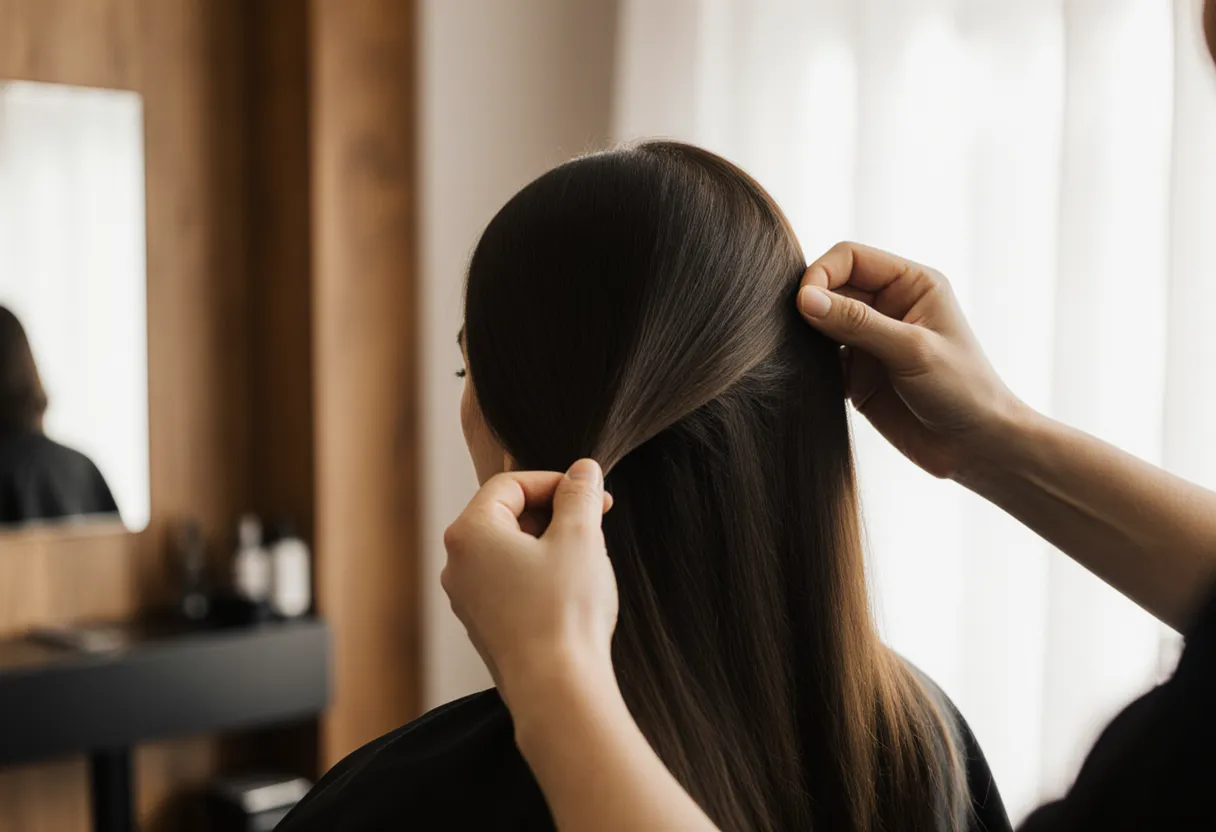
Hair Breakage: A Stylist's Guide
If your ponytail feels thinner at the ends, your brush is full of short broken pieces, or you have a halo of frizzy flyaways that never seems to grow out, you are almost certainly dealing with hair breakage — not hair loss. It is one of the most common things we see in the chair at our hair salon in Glendale, and the good news is that it is usually fixable once you know what is causing it. Here is how to spot it, stop it, and rebuild strength from the inside out.
What Hair Breakage Actually Is
Every strand of hair has an outer layer called the cuticle — overlapping scales that lie flat when hair is healthy and lift or chip away when it is stressed. Underneath sits the cortex, where the protein and bonds that give hair its strength and elasticity live.
When the cuticle wears down, the cortex is exposed. Strands lose elasticity, roughen up, and eventually snap mid-shaft. That snap is breakage. It is mechanical damage to the hair fiber itself, which is why no shampoo can "heal" it — you can smooth it, strengthen what is left, and prevent more, but a broken strand stays broken.
Breakage vs. shedding — know the difference
This is the first thing we check, and it changes the entire plan:
- Shedding strands are full length, root to tip, often with a tiny white bulb at one end. Losing some each day is normal.
- Breakage strands are short, uneven, and have no bulb. You will find them on your shoulders, in the sink, and sticking straight up along your part.
If you are seeing a lot of full-length shedding, a sudden change in density, or anything happening at the scalp itself, that is a conversation for your doctor rather than your stylist. Breakage, on the other hand, is squarely our territory.
What Causes Hair Breakage
Nine times out of ten it is not one villain — it is three or four small habits stacking up. The usual suspects:
- Heat without protection. Flat irons and curling wands running at 400°F+ on dry, unprotected hair cook moisture out of the cuticle fast.
- Over-processing. Back-to-back lightening, box dye layered over salon color, or a smoothing service done too soon after a bleach session.
- Mechanical stress. Brushing soaking-wet hair, tight ponytails in the same spot daily, rough towel-drying, sleeping on cotton pillowcases.
- Protein and moisture imbalance. Too little protein leaves hair mushy and stretchy; too much makes it stiff and brittle. Both end in snapping.
- Environment. In Los Angeles we deal with hard water, dry air, chlorine, and relentless sun — all of which quietly roughen the cuticle over time.
- Neglected ends. Hair that has not been trimmed in eight months will split, and splits travel up the strand.
The LA factor
Clients who come to us from Eagle Rock, Burbank, and Pasadena are often surprised when we point to their shower water. Hard water leaves mineral deposits that make hair feel coarse and look dull, and those minerals also interfere with color. A simple shower filter and a monthly clarifying wash solve a lot of mystery damaged hair complaints.
How to Prevent Hair Breakage at Home
Prevention is where you will get the biggest return. None of this is complicated — it is just consistent.
- Turn the heat down. Most fine-to-medium hair styles beautifully at 300–350°F. Reserve the highest settings for coarse, resistant hair, and always use a heat protectant.
- Detangle the right way. Start at the ends with a wide-tooth comb or wet brush and work upward. Never rake a brush from the roots down through a knot.
- Be gentle when wet. Hair is at its most fragile soaking wet. Squeeze, do not scrub, with a microfiber towel or an old t-shirt.
- Switch to silk. A silk or satin pillowcase and soft fabric scrunchies cut friction dramatically. Tight elastics in the same spot every day create a weak point that eventually snaps.
- Move your part and your ponytail. Small change, real payoff.
- Trim every 8–12 weeks. You cannot grow length while the ends keep splitting.
- Balance your products. Alternate a strengthening mask with a purely hydrating one instead of using protein every wash.
Hair Breakage Treatment: What We Do in the Salon
A proper hair breakage treatment starts with an assessment, not a product. We look at your strands wet and dry, do a gentle stretch test to judge elasticity, and ask what has been done to your hair in the last year. From there, the plan usually involves some combination of:
- Bond-building treatments. These work inside the cortex to repair the broken internal bonds that lightening and heat leave behind. They are the backbone of most repair plans, and they pair well with color services.
- Protein and strengthening treatments. Targeted protein fills gaps in a worn cuticle and firms up stretchy, over-moisturized hair. Dosage matters enormously here — our guide to protein treatments breaks down when you need one and when it will make things worse.
- Deep conditioning and moisture masks. For hair that is brittle and thirsty rather than weak.
- A structural haircut. Sometimes the kindest fix is removing the most compromised inch or two so the rest can grow out evenly. We will always discuss this with you first.
- A rebuilt color plan. If lightening caused the damage, we might shift to lower-lift techniques, lean on gloss and toner for brightness, or stretch your appointments further apart while the hair recovers.
Most clients see a meaningful difference in feel and shine after the first appointment, with real structural improvement over two or three visits spaced a few weeks apart.
Frequently Asked Questions
Can hair breakage be repaired? Broken strands cannot be fused back together, but bond-building and protein treatments genuinely strengthen the hair that remains, and smoothing the cuticle makes damage far less visible. Combined with a trim and better habits, hair looks and behaves dramatically better within a few weeks.
How long does it take to recover from hair breakage? With consistent care, most people see noticeable improvement in 6–12 weeks. Fully growing out heavily damaged lengths takes longer — hair grows roughly half an inch a month, so patience and regular trims are part of the plan.
Why is my hair breaking off at the crown? The crown takes the most friction from brushing, ponytails, and pillow contact, and it is often the first area to get heat-styled. Rotating your part, loosening your ties, and protecting that section from heat usually turns it around.
Does cutting my hair stop breakage? A trim removes split ends before they travel further up the strand, so yes, it stops existing splits from getting worse. It does not address the cause, which is why we pair cuts with treatments and routine changes.
Should I stop coloring my hair if it is breaking? Not necessarily. Depth and gloss services are gentle, and a bond-building additive can be mixed right into your formula. What we usually adjust is the lightening — fewer, more strategic sessions while the hair rebuilds.
Book a Breakage Consultation in Glendale
If you are tired of guessing which product to buy next, come let us look at your hair in person. Our stylists will identify exactly what is causing your hair breakage, build a treatment plan around it, and show you how to maintain it at home. We see clients from across Los Angeles — Glendale, Eagle Rock, Burbank, Silver Lake and beyond. Book your appointment and let's get your hair strong again.
Filed under
Written by
The Look Hair Salon
Stylist at The Look Hair Salon — bringing this story to you from our chairs in Glendale.
Ready for your next look?
Pick a stylist + time online. We'll handle the rest.
Walk-ins welcome, but online bookings get our fastest confirmation.
Keep reading
More from Hair Care Tips
 Hair Care Tips
Protein Treatment for Hair: A Stylist's Guide
Oct 24, 2026 · 6 min
 Hair Care Tips
Japanese Head Spa: A Stylist's Guide
Oct 20, 2026 · 7 min
 Hair Care Tips
Hair Botox Treatment: A Stylist Guide
Oct 18, 2026 · 7 min
Looking for something specific? Browse every guide we’ve published.