Hair Care Tips
Protein Treatment for Hair: A Stylist's Guide
A protein treatment for hair rebuilds strength in damaged, over-processed strands. A Glendale stylist explains when you need it and when you do not.
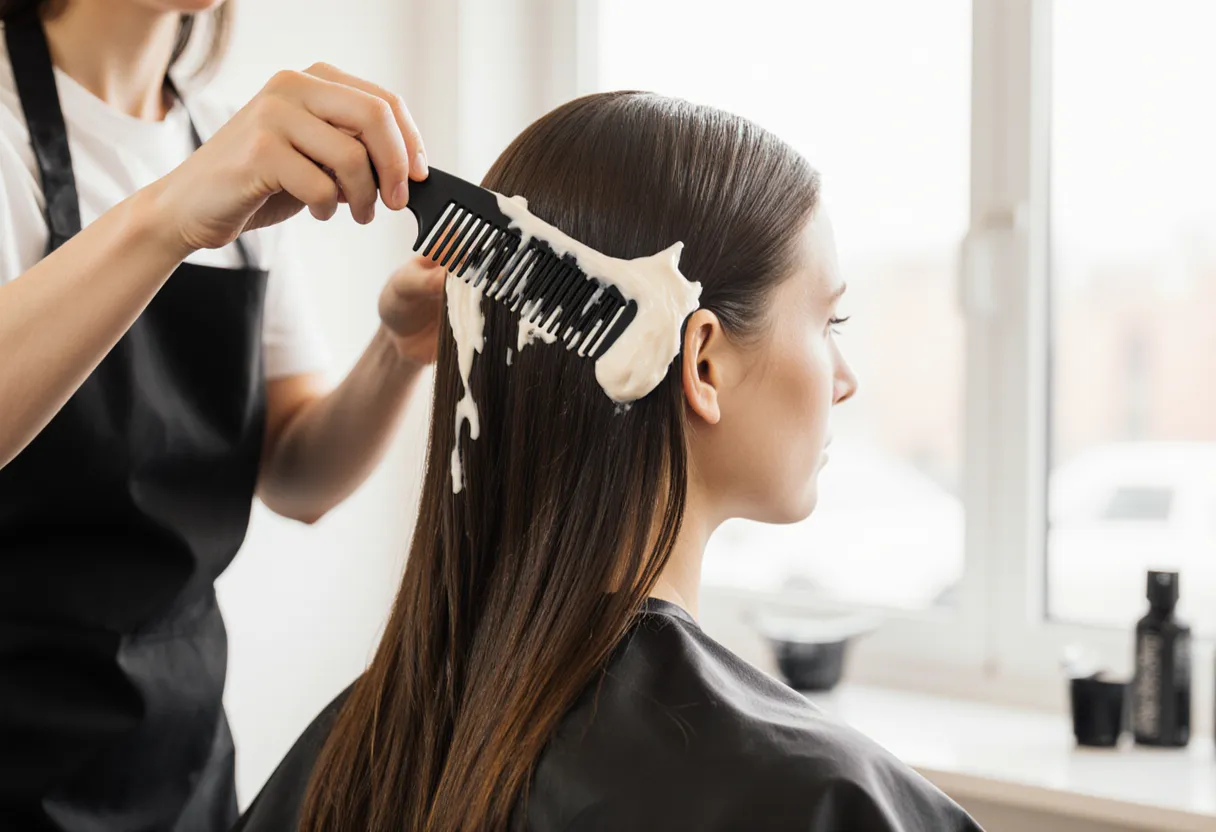
Protein Treatment for Hair: A Stylist's Guide
If your ends snap when you brush, your curls have gone limp, or your color grabs unevenly, a protein treatment for hair is usually the missing step. Protein is the scaffolding your strands are built from, and bleach, heat, and hard water chip away at it faster than most people realize. Here's how a stylist decides when you need protein, when you absolutely don't, and what a salon treatment actually does.
What a Protein Treatment Actually Does
Your hair is mostly keratin, a structural protein arranged in long chains inside each strand. Every time you lighten, flat iron, or scrub with a clarifying shampoo, tiny gaps open in that structure. Those gaps are why damaged hair feels rough, stretches like gum when wet, and refuses to hold a curl.
A hair protein treatment works by depositing small, broken-down proteins — hydrolyzed keratin, wheat, rice, or silk protein, plus amino acids — into those gaps. The molecules are sized to actually penetrate the cuticle rather than sit on top of it. The result is a strand that behaves more like healthy hair: firmer, springier, more reflective.
What it is not is a permanent repair. Protein temporarily patches and reinforces. It buys you structure while your hair grows out, which is exactly what most clients walking into our hair salon in Glendale need after a summer of sun and highlights.
Protein vs. Moisture: The Balance Everything Depends On
This is the part most people get wrong. Hair needs both protein and moisture, and they do opposite jobs:
- Protein = strength and structure. Too little and hair feels mushy, limp, over-elastic.
- Moisture = flexibility and softness. Too little and hair feels stiff, straw-like, brittle.
Load up on protein without moisture and you get protein overload — hair that feels crunchy, dull, and snaps clean off rather than stretching. That's why we always pair a protein service with a deep conditioner or leave-in at the bowl.
How to Know If Your Hair Needs Protein
The quickest at-home diagnostic is the wet stretch test. Take one shed strand, wet it, and pull gently from both ends.
- Stretches a long way, then snaps and doesn't bounce back → protein deficient. Book a protein treatment.
- Barely stretches, snaps immediately → moisture deficient. You need hydration, not protein.
- Stretches a little and springs back → balanced. Leave it alone.
Other signs you're overdue for a protein treatment for damaged hair:
- Ends look gummy or feel spongy when wet
- Curls have lost their pattern and hang in limp S-shapes
- Color fades within two or three washes
- You see mid-shaft breakage, not just split ends
- Hair feels fine but looks dull and flat in photos
Clients with high porosity hair — hair with a raised, gappy cuticle from bleaching or heat — almost always test protein-deficient. If that sounds like you, our breakdown of bond repair treatments explains how protein and bond-building services work together.
Types of Protein Treatments
At-Home Protein Hair Masks
A drugstore or salon-brand protein hair mask is the gentlest option. You'll typically leave it on 5–20 minutes under a shower cap. These are maintenance, not rescue — good for every two to four weeks depending on how damaged your hair is.
Look for hydrolyzed proteins high in the ingredient list. "Hydrolyzed" means the protein has been broken into pieces small enough to actually get inside the strand. Unhydrolyzed proteins mostly coat the outside and rinse away.
Reconstructors and Intensive Treatments
A step up: concentrated reconstructors with higher protein percentages, often left on with gentle heat. These are what we reach for when hair is actively breaking. Strong enough that once every four to six weeks is plenty for most clients.
In-Salon Protein Services
A salon protein treatment for hair gives you three things you can't replicate in your shower: correct diagnosis, professional-strength formulas, and controlled heat. We assess porosity strand by strand, customize the protein-to-moisture ratio, and finish with a pH-balancing rinse that seals the cuticle flat.
For clients in Glendale, Eagle Rock, and Burbank who color regularly, we usually fold a protein service into the color appointment itself — protein before or after lightening keeps the strand strong enough to hold tone evenly.
Protein Treatments for Curly and Textured Hair
Curls are structurally more fragile at every bend in the strand, so protein treatment for curly hair works differently. Tight textures often need protein more frequently but in lighter doses, alternated with heavy moisture. Overload shows up fast in curls — the pattern goes stiff and stringy instead of springy.
How Often Should You Get a Protein Treatment?
There's no universal schedule. It depends on what you're doing to your hair:
- Virgin, heat-free hair: rarely, if ever
- Colored or glossed, minimal heat: light protein mask every 4–6 weeks
- Highlighted, balayage, or bleached: salon protein every 4–6 weeks, mask in between
- Daily heat styling or extensions: every 3–4 weeks
- Actively breaking hair: weekly reconstructor for a month, then reassess
The rule we give clients at our Los Angeles salon: if hair starts feeling stiff or straw-like, stop protein and switch to moisture for two weeks. Your hair will tell you.
How to Make a Protein Treatment Last
- Always follow with moisture. Protein without a conditioner after is the single fastest route to overload.
- Wash with lukewarm water. Hot water lifts the cuticle and flushes out what you just deposited.
- Use a silk or satin pillowcase. Cotton creates friction that undoes mechanical strength overnight.
- Drop your flat iron 20–30 degrees. Protein reinforces the strand; it doesn't make it heatproof.
- Skip clarifying shampoo for a week. Sulfates strip deposited protein along with buildup.
- Add a leave-in with light protein between services for daily reinforcement.
Frequently Asked Questions
What does a protein treatment do for your hair? It deposits small hydrolyzed proteins into the gaps in your hair's keratin structure, temporarily restoring strength, elasticity, and shine. Hair holds curl better, resists breakage, and takes color more evenly afterward.
How often should I do a protein treatment? Most colored or heat-styled hair does well with a professional protein treatment every four to six weeks, with a lighter protein mask in between. Virgin, untreated hair may need it only once or twice a year.
Can a protein treatment damage your hair? Overdoing it can. Too much protein without enough moisture causes protein overload — hair goes stiff, dull, and brittle, and may snap. It's reversible with deep conditioning, but it's why professional diagnosis beats guessing.
Is a protein treatment the same as keratin smoothing? No. A protein treatment strengthens the strand and doesn't change your texture. A keratin smoothing service uses heat to temporarily restructure the hair and reduce frizz and curl. Different services, different goals.
Will a protein treatment help my color last longer? Usually, yes. Protein fills porous gaps where dye molecules escape, so color tends to hold tone longer and fade more evenly.
Book a Protein Treatment in Glendale
The hardest part of protein is knowing whether you need it at all — and the honest answer changes every few months as your hair changes. At The Look Hair Salon, we start with a strand assessment, not a product upsell, and build the right protein-to-moisture plan for your texture, color history, and styling habits. We see clients from across Glendale, Pasadena, Eagle Rock, and Silver Lake who've been guessing for years and are ready to stop.
Book your appointment and let's find out what your hair actually needs.
Filed under
Written by
The Look Hair Salon
Stylist at The Look Hair Salon — bringing this story to you from our chairs in Glendale.
Ready for your next look?
Pick a stylist + time online. We'll handle the rest.
Walk-ins welcome, but online bookings get our fastest confirmation.
Keep reading
More from Hair Care Tips
 Hair Care Tips
Japanese Head Spa: A Stylist's Guide
Oct 20, 2026 · 7 min
 Hair Care Tips
Hair Botox Treatment: A Stylist Guide
Oct 18, 2026 · 7 min
 Hair Care Tips
Hair Gloss Treatment: A Stylist's Guide
Oct 11, 2026 · 6 min
Looking for something specific? Browse every guide we’ve published.