Hair Care Tips
Bond Repair Treatment: A Stylist's Guide
A bond repair treatment rebuilds the broken links inside damaged hair so it stops snapping and stretching. A Glendale stylist explains how it works and who needs it.
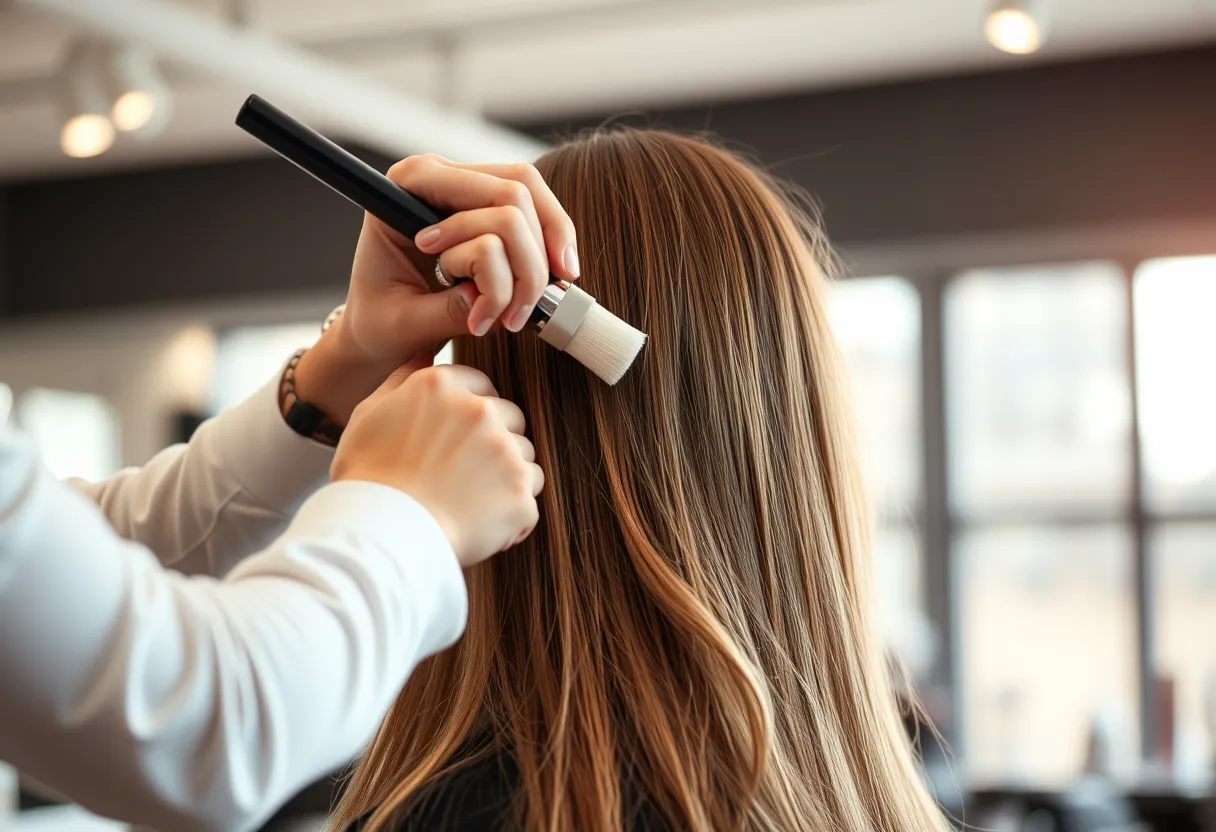
Bond Repair Treatment: A Stylist's Guide
If your hair has started snapping mid-strand, stretching like gum when it's wet, or refusing to hold a curl no matter what you do, a bond repair treatment is probably the thing you actually need — not another mask. Bonding treatments work on the internal structure of the hair rather than coating the outside, which is why they fix problems conditioner can't touch. Here's how bond repair works, who it's for, and what to realistically expect.
What Is a Bond Repair Treatment?
Every strand of hair is held together by chemical links inside the cortex — the most important of these are disulfide bonds, which give hair its strength and elasticity. Bleach, permanent color, relaxers, flat irons, and even hard water and UV exposure break some of those links. Break enough of them and the strand loses its structural backbone: it stretches, frays, and eventually snaps.
A bond repair treatment (you'll also hear it called a hair bonding treatment, a bond builder, or simply bond repair) uses active ingredients that seek out those broken links and reconnect or bridge them. It's a rebuilding step, not a moisturizing step.
The difference matters:
- Conditioner and masks smooth and hydrate the outside of the hair. Instant softness, temporary.
- Protein treatments deposit protein into gaps in the cuticle to fill and reinforce. Helpful, but can make hair stiff if overdone.
- Bond repair reconnects the internal architecture. It's the only category that addresses the actual damage rather than the symptoms.
In our Glendale salon we treat these as three different tools, not three names for the same thing. Most damaged hair needs a bond treatment first, then moisture.
Signs You Need Bond Repair
You don't need a bond repair treatment just because your hair feels dry. Look for structural symptoms instead:
- Gummy or mushy when wet. Wet hair that feels like wet tissue and stretches without bouncing back is the clearest sign of broken bonds.
- Mid-shaft snapping. Short broken pieces sticking up all over, not just at the ends.
- Color that won't hold. Damaged hair is porous — toner and gloss slide right back out within a couple of washes.
- No elasticity. Healthy hair stretches a little and returns. Compromised hair either won't stretch or stretches and stays stretched.
- Rough, uneven texture on hair that's been lightened, especially through the mid-lengths.
If your issue is mostly frizz, dullness, or a smooth-but-thirsty feel, you likely want a gloss or a moisture treatment instead. If you're seeing damage concentrated at the very ends, read our guide on how to get rid of split ends first — bonding won't fuse a split that's already happened.
How a Bond Repair Treatment Works in the Salon
In-color bonding
The most effective use of bond repair is during a chemical service. We mix a bonding additive directly into bleach or color, which protects the internal structure while the lightener is doing its work. This is standard practice for us on any lift at our hair salon in Glendale, and it's the single biggest reason clients can go lighter without their hair falling apart.
Standalone bonding service
If you're coming in with existing damage — maybe from a box color, a bad lightening job, or years of heat — we'll do a standalone hair bond repair treatment. The general flow:
- Consultation and elasticity test. We wet a strand and gently stretch it to gauge how much integrity is left.
- Clarify. Product buildup, minerals, and silicones block the treatment from penetrating.
- Apply the bonding agent to towel-dried hair, focusing on the most compromised sections.
- Process — usually 10 to 20 minutes, sometimes with gentle heat depending on the system.
- Rinse, then follow with moisture. Bonding rebuilds strength; the conditioning step restores softness and slip.
- Blow-dry and assess. We'll tell you honestly whether one session is enough or whether you need a short series.
Most clients feel a real difference after one appointment. Hair that's been through heavy lightening usually needs two or three sessions spaced a few weeks apart before it holds.
Bond Repair vs. Protein Treatment vs. Keratin
This is the question we field most at the shampoo bowl, and the answer changes what you should book.
- Bond repair treatment — reconnects broken internal links. Best for chemical damage, breakage, and elasticity loss. Doesn't change texture.
- Protein treatment — fills cuticle gaps with hydrolyzed protein. Best for porous, limp hair that needs body. Can cause stiffness if you overuse it.
- Keratin smoothing — a texture service that reduces frizz and curl for months. It's a styling change, not a repair. If that's what you're after, our keratin treatment guide walks through the whole process.
They stack well when sequenced properly. What you shouldn't do is layer a protein treatment on top of a bond treatment on top of a keratin in the same month and hope for the best — that's how hair goes brittle.
Keeping the Results (and Choosing an At-Home Bond Repair)
An in-salon treatment gives you the foundation. Maintenance keeps it.
- Use a bond repair shampoo and conditioner as your everyday wash, or at minimum a bond repair hair mask once a week. Look for products that name bond repair specifically rather than generic "repair" claims.
- Turn your heat tools down. 300–350°F is plenty for most hair. Every pass above 400°F undoes work you paid for.
- Space out lightening. Give bleached hair at least eight to ten weeks between full lightening sessions, and consider a partial or root-only service in between.
- Filter your water if you can. Los Angeles water is hard, and mineral buildup makes hair feel rougher and blocks treatments from absorbing properly.
- Don't skip trims. Bond repair strengthens what's there; it can't rescue an end that's already split.
A quick honest note: at-home bond repair products are genuinely useful, but they're formulated at lower strengths than professional systems. They maintain results well. They rarely reverse serious damage on their own.
Frequently Asked Questions
How often should I get a bond repair treatment? For maintenance on healthy, color-treated hair, once every six to eight weeks — usually paired with your color appointment. For actively damaged hair, a series of two to three treatments a few weeks apart, then back to maintenance.
Does bond repair fix split ends? No. Once a strand has split, the only real fix is cutting it off. Bond repair prevents new breakage and strengthens the hair above the split, which is why we usually pair it with a trim.
Is bond repair the same as a protein treatment? No. Protein treatments fill in gaps on the cuticle surface. Bond repair reconnects the internal disulfide links inside the cortex. Hair that's over-proteinized actually feels worse, while bond treatments don't carry that risk in the same way.
Will a bond repair treatment change my hair color? It shouldn't. Bonding agents are color-safe and are frequently mixed into color and lightener. Many clients find their color actually looks richer afterward, because healthier hair holds pigment better.
How long does a bond repair treatment take? A standalone service usually runs about 30 to 45 minutes including the rinse and blow-dry. When it's added into a color service, it adds almost no extra time.
Can I get bond repair on virgin hair? You can, and it's worth it if you use hot tools daily or swim regularly. But if your hair has never been chemically processed and feels strong, moisture is probably a better use of your money.
Ready to Rebuild Your Hair?
If your hair is breaking, stretching, or just doesn't behave the way it used to, come see us. Our stylists will do a proper elasticity assessment, tell you straight whether you need a bond repair treatment or something else entirely, and build a plan that fits your hair and your budget. We take care of clients from all over Los Angeles — Glendale, Eagle Rock, Burbank, and Pasadena — and we'd rather talk you out of a service you don't need than sell you one that won't help.
Book your appointment at The Look Hair Salon and let's get your hair strong again.
Filed under
Written by
The Look Hair Salon
Stylist at The Look Hair Salon — bringing this story to you from our chairs in Glendale.
Ready for your next look?
Pick a stylist + time online. We'll handle the rest.
Walk-ins welcome, but online bookings get our fastest confirmation.
Keep reading
More from Hair Care Tips
 Hair Care Tips
Low Porosity Hair: A Stylist's Guide
Aug 17, 2026 · 7 min
 Hair Care Tips
How to Get Rid of Split Ends: A Stylist's Guide
Aug 11, 2026 · 7 min
 Hair Care Tips
High Porosity Hair: A Stylist's Guide
Aug 10, 2026 · 7 min
Looking for something specific? Browse every guide we’ve published.