Hair Care Tips
How to Remove Hair Dye from Skin: Safe Methods That Actually Work
Whether you've got color on your hairline, hands, or face, these proven methods remove hair dye from skin quickly and safely — plus prevention tips for next time.
Hair dye on your skin is one of those annoyances that catches nearly everyone off guard — a little color migrates during application, you rinse, and suddenly you have a purple ear or a dark hairline. The good news: hair dye stains on skin almost always fade completely within one to three days, and with the right approach you can speed up removal significantly. Here is what the color team at The Look Hair Salon uses and recommends, organized so you can find the right fix fast.
Why Hair Dye Stains Skin — and How Long It Lasts
Hair dye contains pigment molecules small enough to temporarily bond with the proteins in the outermost layer of your skin. Because skin cells turn over much faster than the hair cortex, these stains are never truly permanent — they naturally shed within two to three days as your skin renews itself. A few variables affect how stubborn a stain becomes:
- Dye type: Permanent oxidative dyes (which use developer) tend to produce deeper, longer-lasting stains than semi-permanent or demi-permanent formulas. If you are curious about the chemistry, our guide on the difference between demi and semi-permanent color breaks it down clearly.
- Color depth: Darker shades — black, dark brown, deep red — leave more visible marks than light blondes or pastels.
- Skin location: Porous, thin skin around the hairline, ears, and forehead stains more readily than the neck or arms.
- How quickly you act: The longer dye sits on skin, the more deeply the pigment bonds. Rinsing any skin contact quickly during application always helps.
Household Methods That Work Best on Fresh Stains
Speed is your biggest ally. These approaches work best within the first hour or two of contact:
Soap and warm water — always start here. Before reaching for anything else, scrub the stained area with soap and warm water using firm circular motions. This alone removes surface-level dye and can break the bond before it fully sets.
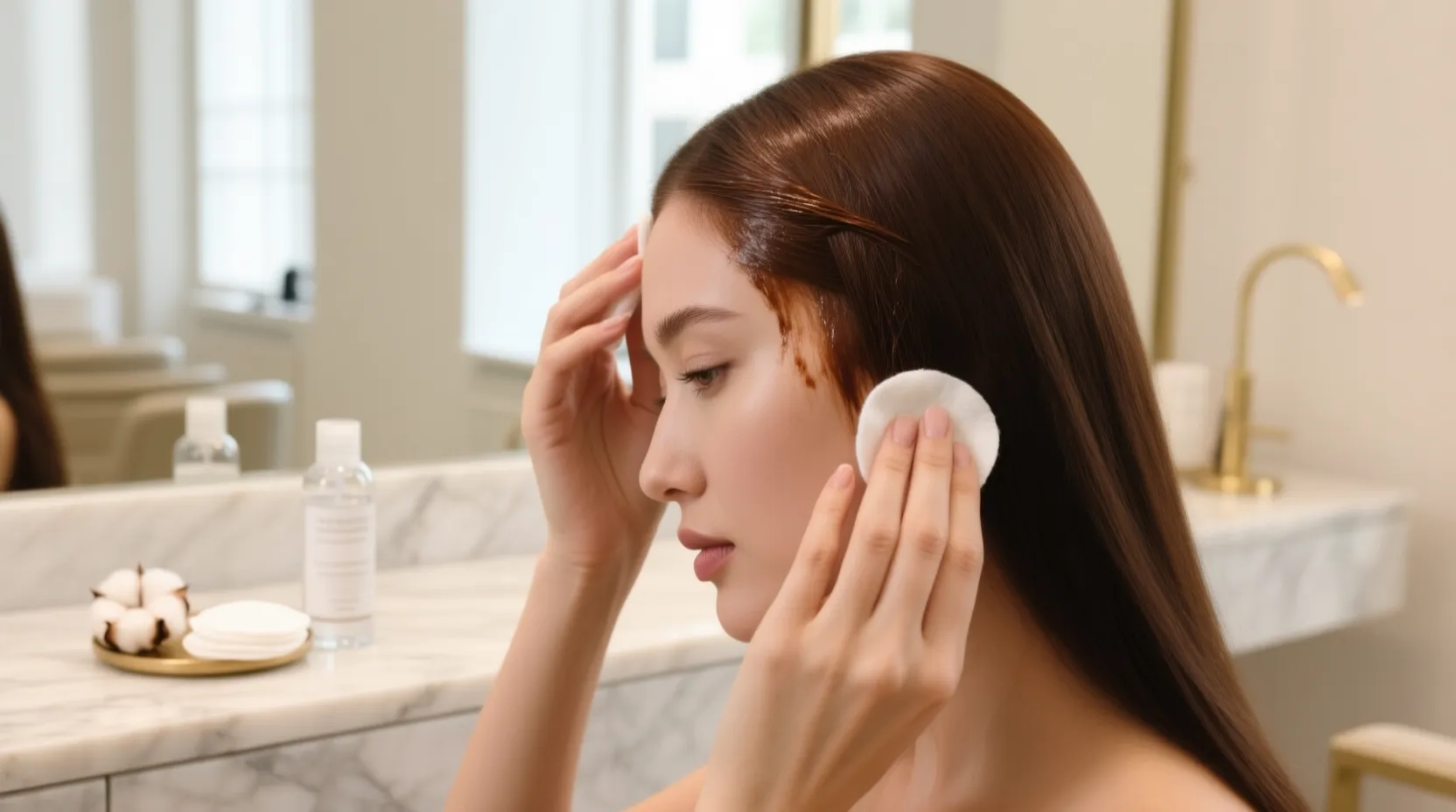
Makeup remover or micellar water. Oil-based makeup removers are surprisingly effective on fresh hair dye. Saturate a cotton pad, press it against the stain for 30 seconds, then rub in small circles. The oils help dissolve the pigment bond without any abrasion.
Rubbing alcohol or hand sanitizer. A small amount on a cotton pad works well for persistent spots on hands, wrists, or neck. It is more drying than oil-based options, so follow up with moisturizer and avoid using it near the eyes.
White toothpaste (non-gel). Apply a small amount and scrub gently with a damp cloth or soft toothbrush. The mild abrasives lift surface dye effectively. Rinse thoroughly.
Baking soda and dish soap paste. Mix equal parts to form a light scrub. Apply with a washcloth, scrub in circles for 30–60 seconds, and rinse well. Works well on hands and arms, but skip this on sensitive skin or anywhere on your face.
How to Remove Hair Dye from Your Face and Hairline
Facial skin is thinner and more sensitive than other areas, so gentle approaches are essential — especially near the eyes:
- Natural oils (coconut, baby, or olive oil): Apply to a cotton pad, press on the stain, let sit for a full minute, then wipe away. This is the gentlest and safest option for your face and hairline.
- Micellar water: Gentle enough for daily eye makeup removal and equally effective on light dye stains. Saturate a cotton pad and wipe without pressing hard.
- Baby shampoo: Work a small lather on the stained area, leave it 30 seconds, then rinse. Very gentle, safe near the eyes, and effective on light marks.
Prevention for next time: Apply a thin line of petroleum jelly just outside your hairline and around your ears before the color goes on. It creates a barrier the dye cannot penetrate. Most professional colorists use this as a standard step at every service.
Stain Removal Methods at a Glance
| Method | Best for | Sensitivity caution | Ease |
|---|---|---|---|
| Soap and warm water | Fresh stains, anywhere on the body | None | Very easy |
| Natural oil (coconut / baby / olive) | Face, hairline, sensitive skin | None | Easy |
| Makeup remover / micellar water | Face, fresh stains | None | Easy |
| Rubbing alcohol | Stubborn spots on hands and arms | Dry or sensitive skin — moisturize after | Moderate |
| White toothpaste | Small isolated spots | Sensitive skin — patch test first | Moderate |
| Baking soda and dish soap | Hands and arms | Skip on irritated or broken skin | Moderate |
| Petroleum jelly | Prevention barrier before coloring | None | Easy (apply before) |
Removing Dye from Your Hands and Scalp
Hands often absorb the most color during at-home sessions. Start with soap and water, then move to rubbing alcohol or a baking soda paste for anything that remains. A pumice stone used very gently on palm skin — never on your face or near cuticles — can help with particularly stubborn marks through mild physical exfoliation.
Scalp staining is common and almost always nothing to worry about. The scalp's natural oils and fast cell turnover cycle mean the color clears on its own within a day or two. If you want to speed it up, apply a clarifying shampoo, let it sit for a minute before rinsing, and avoid aggressive scrubbing. A sensitized scalp is less comfortable during your next color service, so gentleness matters here.
What Professional Colorists Actually Use
When you get color done at a salon, the stylist works quickly to wipe away any dye that contacts your skin mid-application. Professionals have a couple of tools that make this easier:
Professional skin stain removers: These products are formulated specifically for hair dye on skin. They lift pigment faster than household alternatives without the drying effects of alcohol and are widely available at beauty supply stores in the color accessories aisle.
Precise application and barriers from the start: The biggest advantage of a professional service is controlled application that minimizes skin contact before a single stroke of color is applied. The color specialists at The Look Hair Salon in Glendale apply petroleum jelly barriers and use precision brush techniques as a matter of routine — so you leave the chair polished, not patchy.
What Not to Try
A few approaches circulate online that can cause more harm than the stain itself:
- Household bleach: Never apply to skin. Even when diluted, it can cause serious irritation and chemical burns.
- Acetone (nail polish remover): Extremely drying and irritating; unsafe anywhere near the eyes or on facial skin.
- Aggressive scrubbing with abrasive pads: Physical force removes the dye but also strips protective skin layers, leaving skin raw and more vulnerable to irritation and future staining.
- Leaving remover products on too long: Even skin-safe stain removers can irritate if you exceed the labeled contact time. Follow product instructions closely.
Book Your Next Color Service in Glendale
Recurring stained skin after at-home color is one of the most common reasons clients switch to a professional salon. At The Look Hair Salon — 919 South Central Avenue, Suite #E, Glendale, CA 91204, (818) 662-5665 — our color specialists use Redken color and handle every protective detail so you walk out looking exactly as intended.
Whether you are thinking about a balayage or highlights service, a full color refresh, or simply want expert guidance on maintaining color-treated hair between visits, we would love to help. Book your appointment online — we are open Monday and Wednesday through Sunday in the heart of Glendale.
Filed under
Written by
Armen, Color Specialist at The Look Hair Salon
Stylist at The Look Hair Salon — bringing this story to you from our chairs in Glendale.
Ready for your next look?
Pick a stylist + time online. We'll handle the rest.
Walk-ins welcome, but online bookings get our fastest confirmation.
Keep reading