Styling Guides
Fade Haircut: A Stylist's Guide
A fade haircut blends the sides and back from short at the bottom to longer on top. Here is how low, mid and high fades differ, which suits your hair, and what to ask for.
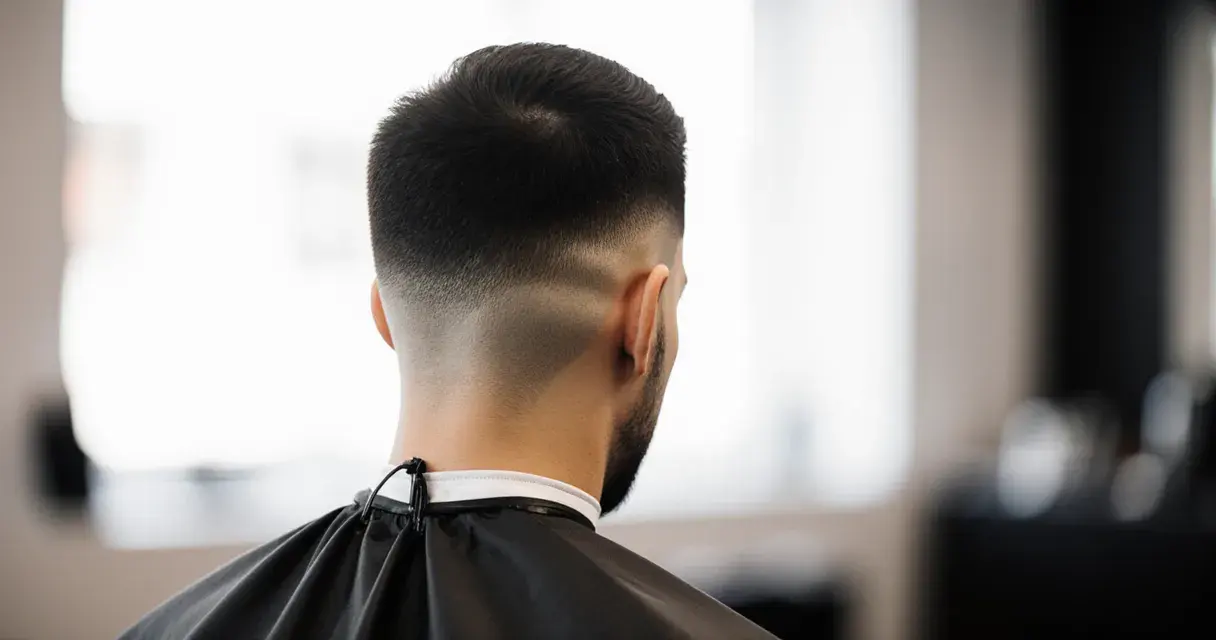
A fade haircut is a cut where the hair on the sides and back goes gradually from short at the bottom to longer toward the top, with no visible line where one length ends and the next begins. The three things you choose are how high the fade climbs (low, mid or high), how short it gets at the bottom (down to skin or leaving some hair), and what happens on top.
At The Look Hair Salon in Glendale, a Faded Cut is $28 and takes 25 min. This guide explains the different fades in plain terms, which ones suit which hair and head shapes, and exactly what to say in the chair.
What a Fade Haircut Actually Is
A fade is built with clippers, working through a series of guard lengths from the neckline up. Each guard leaves the hair slightly longer than the one before it, and the work is in blending the steps between them until the change in length looks like a smooth gradient rather than a set of stripes.
Two things make a fade look good: the blend itself and how it connects to the top. A clean gradient that stops abruptly under a heavy top looks like two different haircuts. That is why we ask what you want on top before we pick up the clippers.
Guard numbers are the simplest way to describe length, and a lower number is shorter. A 1 is very short stubble, a 2 covers the scalp on most people, and "zero" means no guard at all. A skin fade goes shorter still, down to bare skin.
Low, Mid and High: Where the Fade Sits
The name tells you where the shortest part ends and the blend into longer hair begins.
Low fade
The fade stays close to the hairline, curving just above the ears and around the nape. Most of the side keeps some length and darkness. It is the quietest version, easy to wear in an office, and the most forgiving as it grows.
Mid fade
The blend sits around the temples, a little above the top of the ear. It is the middle ground most people mean when they just say "a fade": clearly a fade, but not severe.
High fade
The short section runs up to the upper sides, near where the head starts to curve toward the top. It gives the strongest contrast and puts all the attention on the top. It also shows more scalp, so it shows growth sooner.
Other names you will hear
- Skin fade (bald fade): describes how short the bottom goes, not where the fade sits. Any of the three heights can go down to skin.
- Taper: only the sideburns and neckline are faded, and the rest of the sides are left longer. A good choice if you want a clean outline without a short-sided look.
- Drop fade: the line dips down behind the ear and follows the curve of the head instead of running straight around.
Which Fade Suits Your Hair and Head Shape
There is no rule that a face "needs" one particular fade, but a few things reliably matter.
Hair density and color. Dark, dense hair shows a gradient clearly, so even a low fade has plenty of contrast. Fine or light hair has less contrast against the scalp, and a very high skin fade can make the sides look bare rather than faded. A slightly longer bottom length, a 1 instead of skin, usually looks fuller.
Curl and texture. Curly and coily hair takes a fade well because the texture on top contrasts with the tight sides. The top should be shaped with the curl in mind, and our curly cut guide explains why curls are cut differently. Very straight, coarse hair tends to stick out at the sides as it grows, which is one reason fades are popular for it: short sides stay flat longer.
Head shape. Bumps, dips, scars and a flat spot at the back are more visible the shorter and higher you go. If you are unsure, start with a low or mid fade at a 1 or 2. You can always go shorter next time.
Face shape. A high fade with height on top lengthens the face, which flatters rounder faces. If your face is already long and narrow, a low fade or a taper that keeps some width at the sides is usually more balanced.
What to Ask For in the Chair
"A fade" on its own leaves most of the decisions to guesswork. Give us four things:
- The height: low, mid or high. Point to where you want the short part to stop.
- The shortest length: skin, zero, or a guard number.
- The top: how much length to leave and how you wear it, whether that is pushed back, to the side, forward as a crop, or as natural curls.
- The edges: a natural hairline or a sharp line-up, and whether the neckline is faded out, rounded or squared.
A photo helps more than any description, ideally one of someone with hair like yours. If it is your first time with us, what to expect at your first visit covers how the consultation works.
On our haircuts menu, the Faded Cut is $28 and takes 25 min. If you want facial hair blended into the sideburns, a Beard Trim is $15 and 10 min. A Classic Men's Scissor Cut is $40 if you decide you would rather keep the sides longer and skip the clippers.
How Often a Fade Needs a Trim
Fades have a short shelf life because the whole look depends on a small difference in length. How quickly yours softens depends on how fast your hair grows and how short the fade goes, but as a general guide:
- Skin fades and high fades look sharpest for the first week or two. Many people rebook every two to three weeks.
- Mid fades at a 1 or 2 usually hold their shape for three to four weeks.
- Low fades and tapers are the most forgiving, often four weeks or a little more.
Between full cuts, a Basic Hairline Line-Up ($15, 10 min) cleans up the edges around the forehead, temples and neck, which is usually the first place a fade starts to look grown out.
At home, a few habits keep it looking fresh:
- Wash the scalp properly. With the sides this short, the skin is on show, and flakes or oiliness are easier to see. Our scalp care routine is a good place to start.
- Keep product on top. Use a small amount where the length is and keep it off the faded sides.
- Leave the edges alone. Pushing the hairline back even slightly with a home trimmer takes weeks to grow in.
Frequently Asked Questions
What is the difference between a fade and a taper?
A taper only shortens the hair at the sideburns and neckline and leaves the sides fuller. A fade takes the whole side and back short and blends upward. A taper is subtler and grows out more quietly.
How long does a fade haircut take?
Our Faded Cut is booked for 25 min. Allow another 10 min if you are adding a Beard Trim.
Will a fade work with thinning hair?
Often, yes. Shorter sides reduce the contrast between fuller and thinner areas, which can make the top look denser. We would usually avoid a very high skin fade and keep the blend softer. If you notice sudden or patchy hair loss, or a sore, itchy or scaly scalp, see a doctor or dermatologist. A haircut can disguise thinning, but it cannot address the cause.
Can women get a fade?
Yes. Fades and undercuts work on anyone, and they pair well with pixies and short crops.
Book Your Fade in Glendale
Bring a photo, know your height and your shortest length, and we will handle the rest. Book your appointment at The Look Hair Salon in Glendale. If you are not sure which fade suits you, tell us when you sit down and we will talk it through before the clippers come out.
Filed under
Written by
The Look Hair Salon
Stylist at The Look Hair Salon — bringing this story to you from our chairs in Glendale.
Ready for your next look?
Pick a stylist + time online. We'll handle the rest.
Walk-ins welcome, but online bookings get our fastest confirmation.
Keep reading
More from Styling Guides
 Styling Guides
Curtain Bangs: A Stylist's Guide
Oct 19, 2026 · 7 min
 Styling Guides
Hush Cut: A Stylist's Guide
Oct 14, 2026 · 7 min
 Styling Guides
Digital Perm: A Stylist's Guide
Oct 13, 2026 · 7 min
Looking for something specific? Browse every guide we’ve published.