Styling Guides
Curtain Bangs: A Stylist's Guide
Curtain bangs are the softest, most forgiving fringe you can get. A Glendale stylist explains the variations, who they suit, and how to style them.
Curtain Bangs: A Stylist's Guide
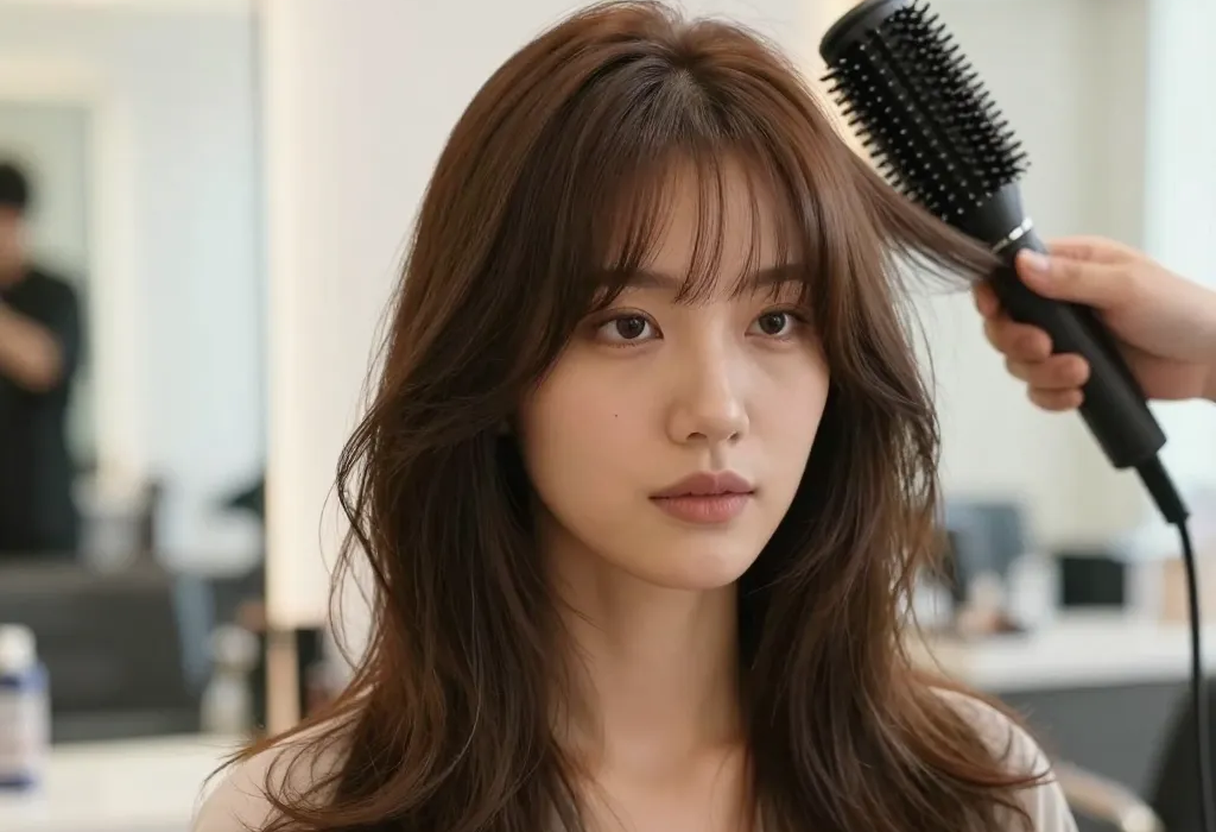
Curtain bangs are the softest, most forgiving fringe we cut — the kind that parts down the middle and sweeps open toward your cheekbones like, well, curtains. If you've wanted bangs but panicked at the thought of a blunt, sit-straight-across fringe, this is your compromise. They frame your face without committing you to a daily flat iron ritual, and they grow out into face-framing layers instead of an awkward middle stage.
Here in our hair salon in Glendale, curtain bangs are hands-down the most requested fringe of the year, and for good reason. Let's talk about what they actually are, who they suit, and how to style them so they behave.
What Are Curtain Bangs, Exactly?
What are curtain bangs? They're a face-framing fringe cut with a center or slightly off-center part, shorter through the middle and gradually longer toward the sides, so the hair falls in a soft "A" shape around your face. The shortest point usually lands somewhere between the mid-brow and the bridge of the nose. The longest pieces blend into your existing length around the cheekbone or jaw.
The key difference from a traditional blunt fringe is the angle. A blunt fringe is cut on a horizontal line and sits flat against your forehead. Curtain bangs are cut on a diagonal with soft, point-cut ends, so they open up and move with you. That's what makes them so wearable — even on a day you don't feel like styling, they read as intentional.
Three variations we cut most often:
- Classic curtain bangs — shortest point at the brow, sweeping to the cheekbone. The most versatile version.
- Long curtain bangs — the shortest point starts around the nose or lip and blends to the jaw. Barely-there, extremely low-commitment, and the easiest grow-out of the bunch.
- Layered curtain bangs — the fringe is connected into shorter face-framing layers behind it, creating more volume and movement through the crown. Beautiful on anyone who wants a shaggier, lived-in shape.
Do Curtain Bangs Suit My Face Shape?
Short answer: almost certainly. The whole appeal of this fringe is that it can be adapted rather than applied.
- Round faces — this is one of the most common questions I get, and yes, curtain bangs are genuinely flattering on round face shapes. We cut the shortest point a little lower and let the sides fall past the cheekbone, which draws the eye vertically and lengthens the face.
- Square or strong jawlines — softer, wispier ends near the jaw take the edge off a defined jaw beautifully.
- Long or oval faces — a shorter starting point around the brow visually shortens the forehead and adds width where you want it.
- Heart-shaped faces — a wider, feathered curtain balances a narrower chin.
The bigger factor is honestly your hair texture and growth pattern, not your face shape. Got a strong cowlick at the hairline? Tell your stylist — we can work around it, but the fringe may need extra length so it has enough weight to lie down.
Curtain Bangs on Straight Hair vs Curly Hair
Curtain bangs on straight hair are the easiest to maintain — the shape falls where you cut it. You'll want a little bend at the ends so they don't hang flat, which takes about ninety seconds with a round brush.
On wavy and curly hair, curtain bangs are gorgeous but must be cut dry and in your natural texture. Cutting curls wet is how people end up with two inches of unexpected shrinkage. Any stylist who cuts curly fringe should be doing it dry, curl by curl.
How to Style Curtain Bangs
This is the part people worry about, and honestly, it's simpler than it looks. How to style curtain bangs comes down to one principle: dry them away from your face while they're wet, and they'll fall correctly all day.
The blow-dry method (my favorite):
- Start with damp — not soaking — bangs. Style them first, before the rest of your hair, while they're at their most cooperative.
- Add a pea-sized amount of light mousse or a heat protectant at the roots.
- Using a round brush, pull the fringe straight down and overdirect it to the opposite side — right side pulled left, left side pulled right. Blast with warm air.
- Swap sides and repeat. This cross-drying is the whole trick; it builds the sweep and kills a stubborn cowlick.
- Finish with a two-second shot of cool air to set the shape.
No-heat method: Right after showering, part your damp fringe down the middle, sweep each side back and away from your face, and clip it with a claw clip or wrap it around a foam roller. Let it air-dry while you get ready, then release. You'll get a soft, natural bend with zero heat damage.
How to curl curtain bangs: Take a 1-inch curling iron, clamp the fringe about halfway down, and curl away from your face — one pass per side, no more than three seconds. Then shake it out with your fingers. Curling toward your face closes the shape and defeats the point.
A note on product: less is more. A dry texture spray at the roots or a tiny drop of lightweight oil on the ends is plenty. Anything heavy will drag your fringe flat by noon, which matters when you're dealing with Los Angeles humidity swings between the coast and the Valley.
Maintenance: The Honest Version
Curtain bangs grow roughly half an inch a month. Because the shape is diagonal and soft, they stay wearable much longer than a blunt fringe — most of our clients from Glendale, Burbank, and Eagle Rock come in for a bang trim every 5 to 8 weeks, and many salons (ours included) offer these trims as a quick, low-cost touch-up between full haircuts.
When you do want to grow them out, curtain bangs are the gentlest exit of any fringe. They simply become face-framing layers. If you like that softer, layered result, it pairs beautifully with a longer layered shape — our guide to the butterfly haircut covers exactly that kind of volume-through-the-front cut.
How to Ask Your Stylist for Curtain Bangs
Bring a photo — always bring a photo. Beyond that, be specific about where you want the shortest point (brow, nose, or lip level), whether you want them connected to layers or cut as a separate fringe, and how much time you'll realistically spend styling in the morning. Honest answers here are what separate a fringe you love from a fringe you clip back.
Frequently Asked Questions
How much do curtain bangs cost? Prices vary by salon and by whether you're adding them to a full haircut or booking a standalone fringe service. In the Los Angeles area, a bang-only cut is typically a short, inexpensive appointment; added to a full cut and style, it's often included or a modest add-on. Call ahead for current pricing.
Should I get curtain bangs if I have thin or fine hair? Yes — curtain bangs are actually one of the best fringes for fine hair. Because the fringe pulls a small amount of hair forward from the front of the head, it creates the illusion of more density around the face. Just keep it on the wispier side so you're not borrowing too much from your overall volume.
Can I cut curtain bangs at home? You can, but I'd rather you didn't. The cut relies on correct sectioning (a triangle from the part back toward the crown), the right amount of tension, and point-cutting at an angle. The most common DIY mistake is cutting a wet fringe way too short. If you're determined, cut them dry, in small increments, and stop earlier than you think.
How long does it take for curtain bangs to grow out? About three to four months to fully blend into your length — but unlike a blunt fringe, they look intentional the entire time. That's the real selling point.
Do curtain bangs work with a cowlick? Usually, yes. A cowlick at the front hairline needs the fringe cut with a bit more length and weight so gravity works in your favor, plus consistent cross-drying when you style. Point it out at your consultation so we can plan around it instead of fighting it.
Ready to Try Curtain Bangs?
The best curtain bangs are the ones cut for your texture, your part, and how much effort you actually want to put in on a Tuesday morning. That's a conversation, not a formula — and it's exactly what our consultations are for.
Our stylists cut curtain bangs for clients across Glendale, Pasadena, Burbank, and Silver Lake every week, and we'll be straight with you about what will and won't work with your hair. Book your appointment and let's find the right fringe for you.
Filed under
Written by
The Look Hair Salon
Stylist at The Look Hair Salon — bringing this story to you from our chairs in Glendale.
Ready for your next look?
Pick a stylist + time online. We'll handle the rest.
Walk-ins welcome, but online bookings get our fastest confirmation.