Color Trends
Color Melt Hair: A Stylist's Guide
Color melt hair blends your shades into a seamless gradient with no grow-out line. A Glendale stylist explains the technique, the upkeep and who it suits.
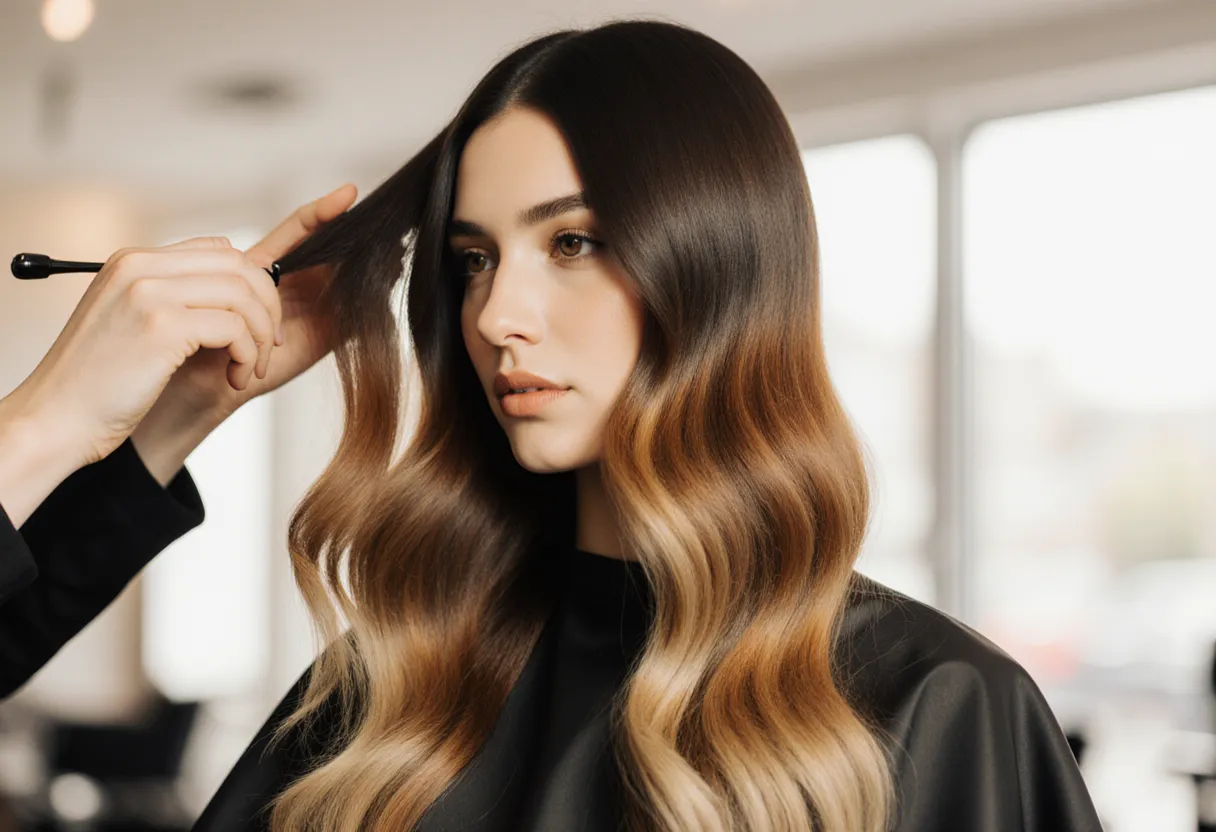
If you've ever grown out highlights and watched a hard line creep down your head, a color melt is the fix you've been looking for. Color melt hair blends two or three shades into each other so seamlessly that your eye can't find where one ends and the next begins — no stripe at the root, no shelf halfway down. It's the technique we reach for most at our hair salon in Glendale when someone wants dimension that still looks like it grew that way.
What Is a Color Melt?
A color melt (you'll also see it called color melting or a hair color melt) is a blending technique, not a single shade. Your colorist applies a deeper tone at the root, a mid-tone through the mids, and a lighter tone toward the ends — then works the formulas into one another while they're still processing so the transitions dissolve.
The result is a gradient with no visible demarcation. Think of a deep espresso root easing into chestnut, easing into a soft caramel at the ends. Three colors, zero lines.
Two things make it work:
- Overlap. Each formula is feathered into the one above it rather than stopped cleanly.
- Tonal family. The shades are chosen to be related — usually within two or three levels of each other — so the blend reads as natural depth, not a costume.
Color Melt vs. Balayage vs. Ombré
These get used interchangeably online, and they shouldn't be.
- Balayage is a lightening technique — freehand painting that creates soft, sun-kissed highlights. It's how lightness gets placed.
- Ombré is a placement — dark on top, light on the bottom, usually with a more noticeable gradient.
- Color melt is a blending technique — it's how colors are married together, and it's often used to finish or soften the other two.
That's why a stylist might melt the root into your existing balayage. The two aren't competitors. If you're still deciding between lightening methods, our breakdown of balayage vs. highlights is a good companion read.
Who Color Melt Hair Suits Best
This is one of the most forgiving color services we offer, and it works across a wide range of clients:
- Anyone growing out highlights or balayage. Melting a deeper shade over the regrowth erases the line instantly.
- Clients who want low maintenance. Because the root is intentionally darker, there's nothing to "grow out."
- Naturally dark hair. Brunettes get warmth and movement without committing to all-over lightening.
- Blondes who want dimension. A soft shadowed root keeps blonde from looking flat or wiggy.
- Anyone covering a color correction. Melting is one of the kindest ways to unify banded or patchy hair.
If your hair has been through a lot, we may pair the service with a bond-building step. Our guide to bond repair treatment covers why that matters.
How a Color Melt Appointment Actually Works
Here's what to expect when you book a hair color melt at our Los Angeles area salon.
The Consultation
We start dry, in natural light. Your colorist looks at your existing color history, your regrowth, how much warmth your hair pulls when lightened, and your skin tone. Bring photos — melts are highly customizable and a reference image tells us more than a description does.
The Application
Most melts follow this sequence:
- Root shadow first. A demi-permanent deeper tone goes on at the scalp and is feathered down an inch or two.
- Mid-tone next. Applied directly beneath, overlapping the root formula so they bleed together.
- Ends last. The lightest shade, often a gloss or toner over previously lightened hair.
- Blend with a brush or fingers. This is the "melt" — physically working the borders together before anything sets.
If lightening is needed first, that's a separate step. A melt placed over fresh balayage can turn a two-tone look into a true gradient in a single sitting.
Timing and Cost
A melt over existing color typically takes 90 minutes to two hours. If you're lightening first, plan for three to four hours. Pricing depends on length, density, and whether lift is involved, so we quote at consultation rather than off a menu.
Keeping a Color Melt Looking Fresh
The whole point of this technique is longevity, but a few habits protect it:
- Wash in cool water. Hot water opens the cuticle and lets deposited tone slide out.
- Use a color-safe, sulfate-free shampoo. Clarifying formulas strip a melt faster than anything else.
- Space out your washes. Two to three times a week is plenty for most hair types.
- Book a gloss between appointments. A refresh every 8–10 weeks keeps the mid-tones from going dull or brassy.
- Heat protectant, always. Faded ends are usually heat-damaged ends.
Because there's no hard regrowth line, most of our Glendale clients stretch full appointments to 12–16 weeks — significantly longer than traditional foils. Clients coming from Burbank, Pasadena, and Eagle Rock tend to love that the drive is worth it precisely because they're making it less often.
Frequently Asked Questions
Is a color melt damaging to hair? The melting step itself uses demi-permanent color or gloss, which is gentle and deposit-only. Any damage risk comes from the lightening step, if your look requires one. If you're melting over color you already have, it's one of the lowest-impact services on the menu.
How is a color melt different from a shadow root? A shadow root is one piece of the puzzle — just the darker tone applied at the scalp. A full color melt blends the root and the mids and the ends. You can read more in our shadow root guide.
Can I get a color melt on short hair? Yes, though it's more subtle. On a bob or lob there's less canvas for a three-tone gradient, so we usually do a two-tone melt with a shorter transition zone. It still reads as depth and movement.
How long does a color melt last? The gradient itself doesn't grow out as a line, so the shape lasts for months. The tone will soften over 8–12 weeks depending on how often you wash, which is why a mid-cycle gloss is the standard refresh.
Will a color melt cover gray? Partially. Demi-permanent root shadows blend gray rather than opaquely covering it. If you have significant gray at the scalp, we'll usually pair the melt with a permanent root application first.
Ready to Try a Color Melt?
A color melt is the rare color service that looks more expensive and costs you less upkeep. If you're tired of the grow-out line, or you just want your color to look like it belongs to you, we'd love to build one for your hair.
Book your color melt consultation at The Look Hair Salon in Glendale — we'll talk through your history, your maintenance tolerance, and exactly which shades will melt beautifully into each other.
Filed under
Written by
The Look Hair Salon
Stylist at The Look Hair Salon — bringing this story to you from our chairs in Glendale.
Ready for your next look?
Pick a stylist + time online. We'll handle the rest.
Walk-ins welcome, but online bookings get our fastest confirmation.
Keep reading
More from Color Trends
 Color Trends
Caramel Highlights: A Stylist's Guide
Oct 27, 2026 · 7 min
 Color Trends
Honey Blonde Hair: A Stylist's Guide
Oct 26, 2026 · 7 min
 Color Trends
Strawberry Blonde Hair: A Stylist's Guide
Oct 23, 2026 · 7 min
Looking for something specific? Browse every guide we’ve published.