Color Trends
Shadow Root: A Stylist's Guide
A shadow root blends soft depth at the scalp so blonde grow-out looks intentional. A Glendale stylist explains the process, upkeep, and how long it lasts.
Shadow Root: A Stylist's Guide
A shadow root is the reason some blonde looks expensive and some blonde looks like a root touch-up you already need. It's a soft band of deeper color blended at the scalp so your grow-out fades in instead of announcing itself. If you've ever stared at a hard line three weeks after a highlight appointment, this is the fix — and it's one of the most requested add-ons at our hair salon in Glendale.
What Is a Shadow Root, Exactly?
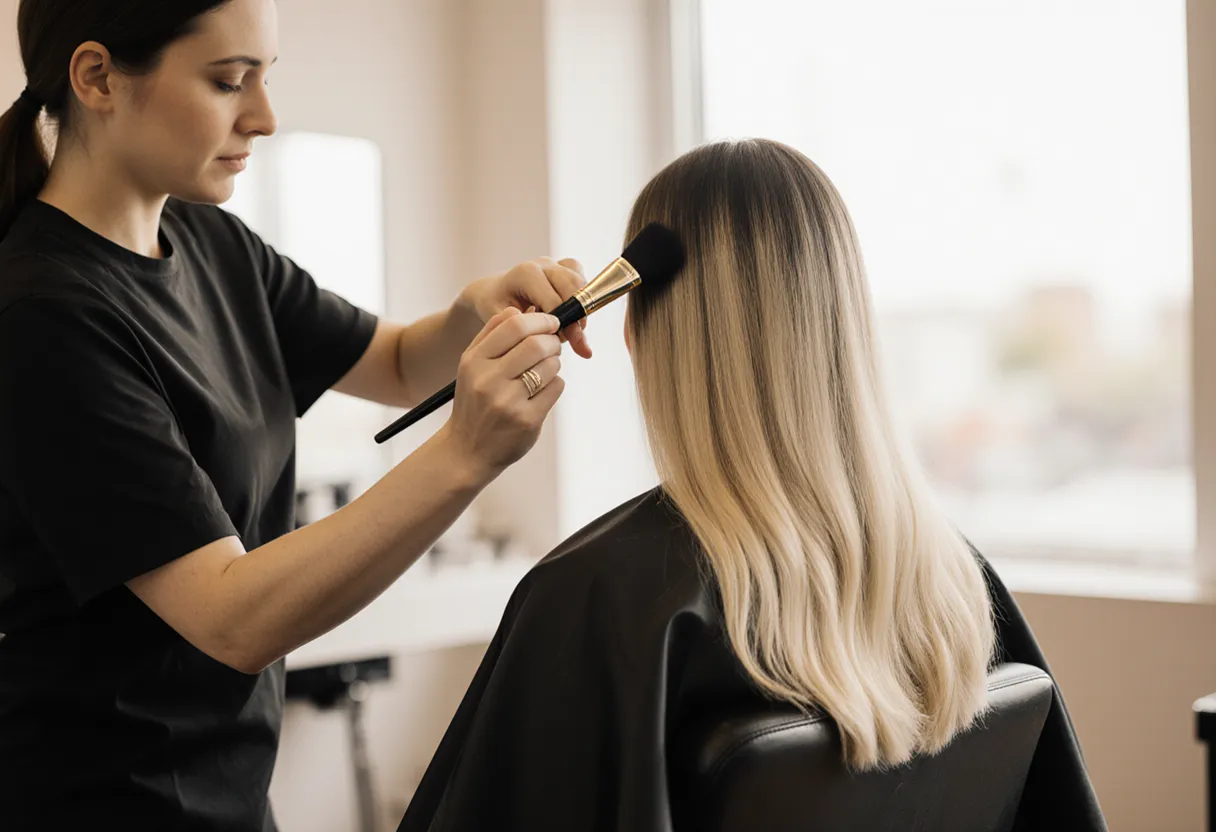
A shadow root is a deliberate darker zone applied at the base of the hair — usually the first half-inch to two inches — that's then blended down into your lighter lengths. Think of it as built-in grow-out. Instead of blonde starting at the scalp, it starts a little lower, and the transition is diffused so the eye never catches a line.
The technique goes by a few names, and stylists use them slightly differently:
- Shadow root — a soft, blended depth at the base, typically the broadest term
- Root smudge — the toner or color literally smudged with a brush or fingers through the line of demarcation
- Root melt — a slower, more gradual blend that travels further down the strand
- Root tap — the lightest version, just a whisper of depth tapped onto the regrowth
All four live on the same spectrum. The difference is how deep the color goes, how far it travels, and how sharp or diffused the edge is. When someone asks about root tap vs root smudge, the honest answer is: it's a matter of degrees, and your stylist should be choosing based on how your hair grows and how often you can come in.
Who Should Get a Shadow Root?
This isn't a blonde-only service, though blondes are the most common candidates. A shadow root works beautifully if you:
- Have blonde hair with dark roots naturally and want the contrast intentional instead of accidental
- Are stretching your appointments and need grow-out to look designed
- Have highlights or balayage that have started reading flat or stripy at the top
- Want dimension without committing to going darker overall
- Are growing out an old color and need a bridge
It's especially useful for clients with naturally deep base color — a lot of our clients across Los Angeles have level 4 to 6 natural hair, and a bright blonde at the scalp on that base will show a hard line in about ten days. A shadow root buys you months.
When It's Not the Right Call
If your natural base is already light, there may not be enough contrast for a shadow root to read as anything but muddy. And if you love a bright, solid, scalp-to-ends platinum, a shadow root works against that goal. Tell your stylist what you actually want to see in the mirror — we'd rather talk you out of a service than hand you something you don't love.
How We Create a Shadow Root at the Salon
Here's what the appointment actually looks like:
- Consultation and base read. We look at your natural level, your existing lightened hair, and where the line sits. We decide how deep to go — usually one to two levels darker than your lightest pieces, sometimes matched to your natural base.
- Lighten first, if needed. If you're in for highlights or balayage, all the lightening happens first. The shadow root is a finishing step, not the opening act.
- Rinse and dry. The hair gets rinsed and towel-dried so the color placement is precise and doesn't bleed where we don't want it.
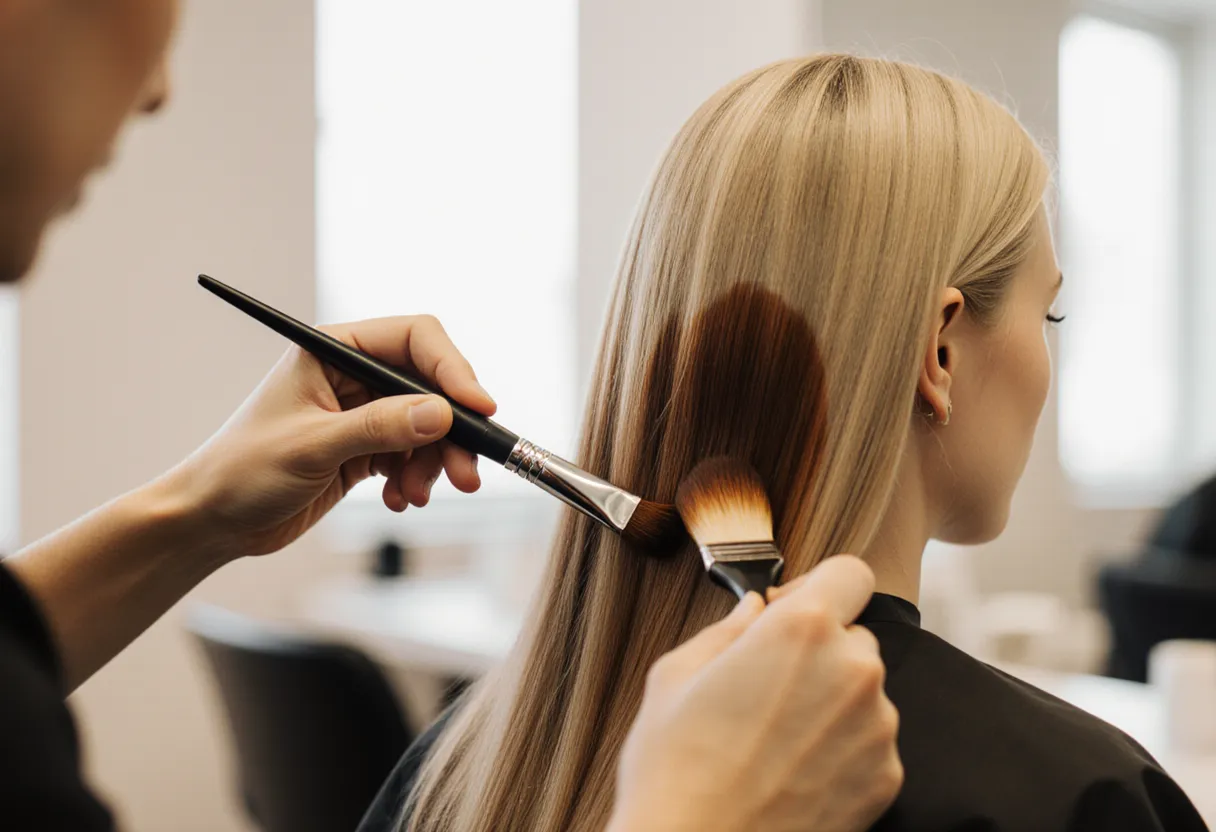
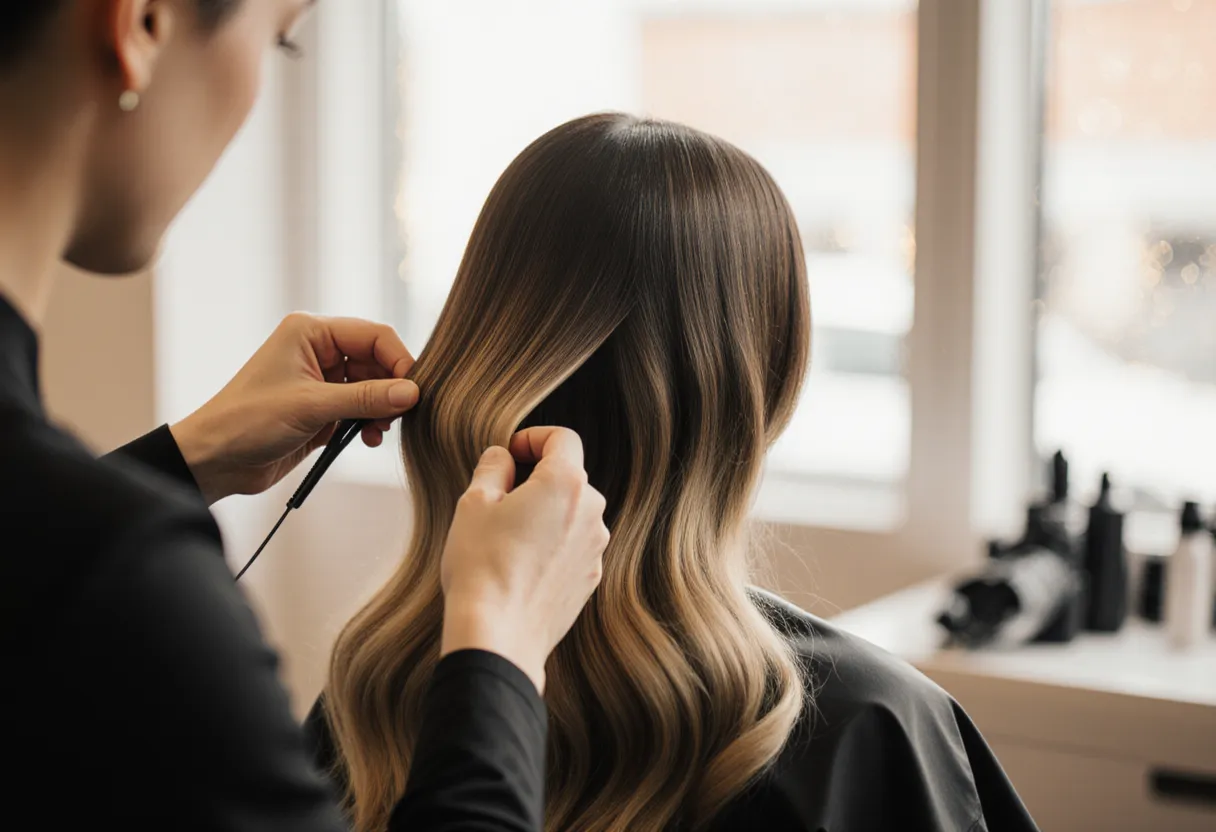
- Apply the depth. We paint the deeper formula at the base, then feather the edge downward with a brush or gloved fingers. This is the part that separates a good root smudge from a visible stripe — it's all in how the edge gets broken up.
- Process short. Most shadow roots process five to fifteen minutes. It's a fast, low-commitment step.
- Tone and gloss the lengths. A blonde root melt almost always finishes with a gloss so the mids and ends stay cool, shiny, and connected to the new depth.
The whole add-on takes about 20 to 30 minutes on top of your color service. If you're already familiar with how we add depth back into over-lightened hair, our guide to reverse balayage covers the bigger version of the same idea.
Shadow Root vs. Ombre vs. Balayage
These get confused constantly, so here's the plain version:
- Shadow root is about the first inch or two. It's a grow-out strategy.
- Balayage is a highlighting technique — hand-painted lightness through the lengths.
- Ombre is a full gradient from dark to light across the whole head, with a much longer transition zone.
You can absolutely combine them. A dark root balayage is exactly that: hand-painted lightness with intentional depth kept at the scalp. It's one of the most-requested combinations we do for clients coming in from Eagle Rock, Burbank, and Pasadena, because it's beautiful and it's forgiving between appointments.
Making It Last
A shadow root is a color service, which means it fades. To keep the blend soft rather than patchy:
- Wash less, and cooler. Hot water opens the cuticle and pulls toner out fast.
- Use color-safe, sulfate-free shampoo. Clarifying formulas strip a shadow root quickly.
- Skip the purple shampoo at the roots. If you use it, focus on the mids and ends — purple toner on a smudged root can turn it dull or gray.
- Protect from heat. Always use a heat protectant before hot tools; heat fades deposited color faster than sunlight.
- Book a gloss between color appointments. A gloss at six to eight weeks refreshes the whole thing without touching the lightening.
Done well, a shadow root can stretch your full highlight appointment from six weeks out to twelve or sixteen. That's the real value — not just the look, but the calendar.
Frequently Asked Questions
How long does a shadow root last? The deposited color typically lasts six to ten weeks depending on how often you wash, your water, and your products. The effect lasts longer, because as it fades your natural regrowth is coming in underneath it and doing similar work.
Does a shadow root damage your hair? A shadow root is a deposit-only service in most cases — no lightener, no lift. It's one of the gentlest things we do. If it's part of a highlighting appointment, the lightening is the part that requires care, not the smudge.
What's the difference between a root smudge and a root melt? A root smudge is focused right at the line of demarcation and blended just past it. A root melt travels further down the strand for a longer, softer gradient. Melts read more dramatic; smudges read more like natural depth.
Can a shadow root cover gray? It can camouflage scattered gray at the scalp, but it's not a gray coverage service. Demi-permanent formulas used for smudging blend gray rather than fully covering it. If you have significant gray, we'll talk about pairing it with a root color.
How much does a shadow root cost? As an add-on to a color service it's typically modest — it's a short application. As a standalone refresh with a gloss, it's priced closer to a toning appointment. We'll quote you at consultation so there are no surprises at checkout.
Ready for Blonde That Grows Out Beautifully?
If you're tired of counting the weeks until your line shows, a shadow root is the single easiest change you can make to your color routine. Our stylists will look at your natural base, your current highlights, and how often you can realistically get in — then build a blend that works with your life, not against it.
Book your appointment at The Look Hair Salon in Glendale, and let's make your grow-out the best-looking part of your color.
Filed under
Written by
The Look Hair Salon
Stylist at The Look Hair Salon — bringing this story to you from our chairs in Glendale.
Ready for your next look?
Pick a stylist + time online. We'll handle the rest.
Walk-ins welcome, but online bookings get our fastest confirmation.