Color Trends
What Is Balayage? Your Complete Guide to the Color Technique
Balayage is the freehand French color technique behind the natural, sun-kissed highlights everyone asks for — here is everything you need to know before sitting in the chair.
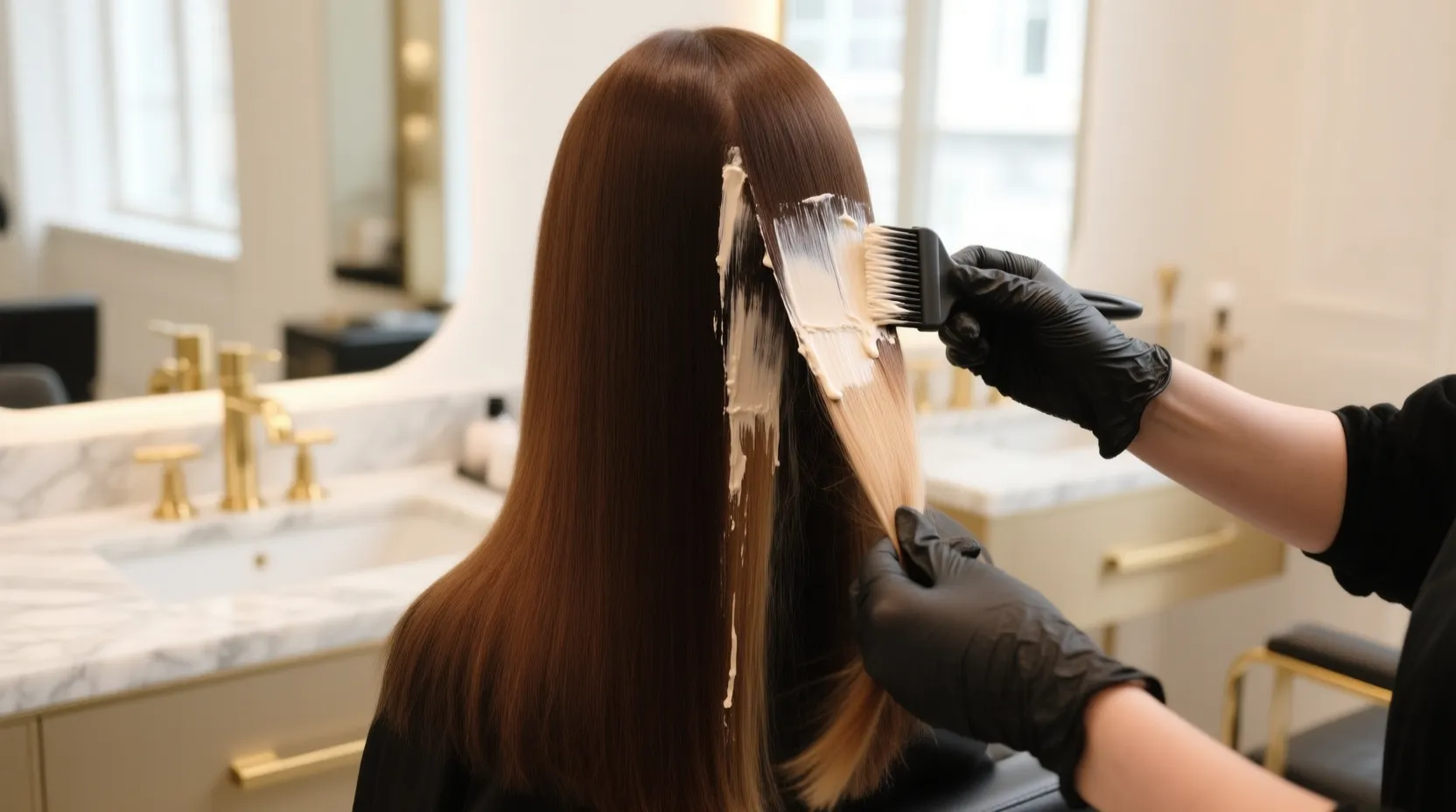
Balayage is a freehand French hair-coloring technique where a colorist paints lightener or dye directly onto sections of hair in sweeping, feathered strokes — no foils, no mechanical parting grid, no uniform saturation from root to end. The result is a natural graduation of color that mimics the way sunlight lightens hair over time: darker and richer at the root, progressively more luminous through the mid-lengths and ends. That sun-kissed, dimensional quality has made balayage the most-requested color service at The Look Hair Salon in Glendale since we opened in 2011, and for good reason. Whether you're new to color or transitioning from a traditional highlight routine, this guide covers everything you need to know before sitting in the chair.
How Balayage Is Applied: The Freehand Method
The word balayage is French for "to sweep," which perfectly describes the technique. Instead of wrapping sections in foil packets and saturating from root to tip, your colorist uses a wide flat brush to sweep lightener across the surface of selected sections. The application is concentrated toward the mid-length and tip, feathering upward to blend softly into the natural root color rather than creating a hard line of demarcation.
No two balayage applications are identical. Your colorist decides in the moment how much lightener to apply, how high to bring the application on each section, and which sections to skip entirely. Face-framing pieces typically receive the most lightening to brighten the complexion; layers underneath may be left closer to the natural depth to create a sense of movement. Some colorists use light back-combing at the root to soften the blend further; others work on an open, flat surface for a more painterly result.
At The Look, our colorists use Redken formulas specifically chosen for your starting level and target shade. A brief consultation before the application maps out your placement strategy, so by the time the brush touches your hair, every decision is intentional.
Balayage vs. Traditional Highlights: Key Differences
The two techniques can produce similar finishes at a glance — both create lighter strands within a darker base — but the application method, grow-out behavior, and maintenance cadence are meaningfully different.
| Balayage | Traditional Foil Highlights | |
|---|---|---|
| Application | Freehand brush strokes on hair surface | Foil-wrapped sections, root to tip |
| Root saturation | Root left natural; soft shadow blends in | Saturated from root; hard regrowth line forms |
| Color graduation | Gradual, light-to-dark by section | Even tone throughout each foil |
| Grow-out look | Soft, intentional; looks natural for months | Distinct regrowth line after 6–8 weeks |
| Maintenance | Touch-up every 3–5 months | Every 6–10 weeks for most clients |
| Customization | Highly variable; placement tailored per client | More systematic; uniform coverage |
| Best for | Lived-in, natural, sun-kissed dimension | High-contrast, precise, uniform brightness |
If you're deciding between balayage and ombré, our comparison post on ombré vs. balayage color technique walks through the gradient distinction in detail.
What Results Can You Expect?
Balayage results vary based on your current hair color, hair health, and your target shade.
Light to medium brown starting hair responds well in a single session, typically achieving honey, caramel, or soft golden blonde tones with good dimension throughout. The result reads as natural and intentional — not chemically processed.
Dark brown or black hair requires more lift to see significant lightening. One session can introduce warmth and dimension, but reaching a dramatically lighter blonde may take multiple appointments, with a pre-lightening step added to build the base safely. Your colorist will set honest expectations during the consultation.
Previously highlighted or colored hair is often an ideal candidate. Balayage integrates beautifully over old foil highlights that have grown out, helping to blend the regrowth line and add fresh depth and dimension without starting from scratch.
Results are inherently dimensional — that's the signature of the technique. If your goal is a single, flat, even shade all over, balayage isn't the right service; a full-color application would be more appropriate.
How Long Does Balayage Last — and How Often Should You Touch It Up?
Because balayage doesn't saturate the root area, there's no hard regrowth line to contend with as your hair grows. Most clients return for a refresh every three to five months. Those starting from very dark hair or targeting a lighter result may find the shorter end of that range more comfortable; those maintaining subtle warm dimension often stretch comfortably to four or five months.
Between full balayage sessions, a gloss or toner service — typically a 30-to-45-minute appointment — can refresh the tone, seal the cuticle, and add shine without additional lift. It's a practical way to extend your balayage between full applications while keeping the color vibrant.
For a full breakdown of appointment length and what to budget, see our Glendale balayage cost and timing guide.
Is Balayage Right for Your Hair Type?
Balayage works across a wide range of textures, though it shows differently on each:
Straight or fine hair shows color placement very clearly because light reflects evenly off a smooth surface. Precise, face-framing placement and thoughtful section selection matter more on fine hair — there's less natural texture to hide any awkward transitions.
Wavy and curly hair is arguably where balayage shines brightest. The color wraps around the curl pattern and catches light naturally within the wave, making the result look especially organic and sun-touched. Many curly clients find balayage one of their lower-maintenance color options because the curl itself provides dimensional texture that blends grow-out beautifully.
Thick or coarse hair benefits from the freehand approach because the colorist can focus product on the highest-impact sections rather than working through every strand. A traditional full-highlight set on thick hair can be a very long appointment; balayage can often achieve excellent dimension in considerably less time.
Hair health is also a factor. Severely damaged, over-processed, or chemically compromised hair may not respond predictably to lightener. Your colorist will assess integrity at the consultation and advise whether a strengthening treatment or phased approach makes sense before any color is applied.
Meet the color team at The Look to see the specialists who will be guiding your balayage journey.
How to Care for Balayage at Home
Lightened hair is more porous than untreated hair, which means a few targeted habits make a real difference in how long your balayage stays vibrant, healthy, and true to tone.
Use a sulfate-free, color-safe shampoo. Sulfates are effective cleansers, but they are also efficient at stripping color — particularly at the toned, lighter ends where balayage lives. Switching to a gentler formula extends the life of your toner and keeps the lightened sections soft.
Rinse with cooler water. Hot water opens the hair cuticle, accelerating color fade and increasing porosity in already-lifted strands. A cool water finish at the end of your rinse takes seconds and helps keep the cuticle closed.
Add a weekly deep conditioning treatment. Balayage-lightened ends benefit from extra moisture. A bond-repair mask or deep conditioning treatment once a week helps maintain elasticity, reduces breakage, and keeps the ends from looking dry or brassy.
Apply heat protectant before any heat styling. Lightened hair can sustain damage at lower temperatures than untreated hair. A quality heat protectant — in spray or serum form — is a non-negotiable step before any blow-dry, flat iron, or curling iron work.
Protect from UV on Glendale's sunny afternoons. Extended sun exposure can shift a toned ash-blonde or cool caramel balayage toward brassiness. A UV-protectant hair product, even a lightweight spray, makes a meaningful difference in maintaining your chosen tone between salon visits.
Your colorist will recommend specific Redken aftercare products suited to your formula and result at the end of your appointment.
Book Your Balayage Consultation in Glendale
Balayage at its best starts with an honest conversation — about your lifestyle, your maintenance preference, your starting point, and what your hair can safely achieve. The technique is highly adaptable, but the results depend entirely on a thoughtful, experienced colorist making the right placement decisions for your specific hair.
The Look Hair Salon has been specializing in Redken color services in Glendale since 2011. We are located at 919 South Central Avenue, Suite #E, Glendale, CA 91204, serving clients from Glendale, Pasadena, and throughout the Foothills area.
Book your balayage consultation and let us know what you are envisioning. We will map out the right technique, timeline, and maintenance plan before we ever touch your hair — and we will be honest with you about what is achievable in one visit versus what is better spread across two or three.
Filed under
Written by
Armen, Color Specialist at The Look Hair Salon
Stylist at The Look Hair Salon — bringing this story to you from our chairs in Glendale.
Ready for your next look?
Pick a stylist + time online. We'll handle the rest.
Walk-ins welcome, but online bookings get our fastest confirmation.
Keep reading