Styling Guides
Types of Hair Extensions: A Stylist's Guide
The different types of hair extensions explained — clip-in, tape-in, fusion, halo and more, plus how to choose the right method for your hair.
Types of Hair Extensions: A Stylist's Guide
Dreaming of longer, fuller hair but not sure where to start? Understanding the different types of hair extensions is the first step, because the right method depends on your hair, your lifestyle, and how much upkeep you actually want. As a stylist at our hair salon in Glendale, I walk clients through this decision every week — so let's break down each option, what it costs, and who it's really for.
Extensions have come a long way from the obvious, clip-in pieces of a decade ago. Today's methods are seamless, customizable, and — when applied correctly — completely undetectable. Whether you want everyday volume or a dramatic length change for a wedding in Pasadena or a night out in Silver Lake, there's a method that fits.
What Hair Extensions Actually Do
Extensions add length, volume, or both by attaching extra strands of hair to your own. The best sets use 100% Remy human hair, which keeps the cuticle intact and aligned so the hair behaves like your own — you can wash it, heat-style it, and even color it.
A few things every method has in common:
- Quality matters most. Genuine Remy human hair lasts far longer and blends more naturally than synthetic.
- Color is customized. A colorist matches or blends extensions to your base, often adding dimension so the transition disappears.
- Maintenance is non-negotiable. Every method needs a gentle home routine and periodic salon visits to stay flawless.
The Main Types of Hair Extensions
Here are the methods we use and recommend most often, from lowest commitment to most permanent.
Clip-In Hair Extensions
Clip-in hair extensions are the only truly temporary option — wefts of hair attached to small pressure clips that you put in and take out yourself in minutes.
- Best for: special events, occasional volume, first-timers testing the waters.
- Wear time: in and out daily; no salon application needed.
- Upkeep: low — store them properly and they can last 6–12 months.
If you only want fuller hair for a photoshoot or a wedding, clip-ins are the budget-friendly, no-commitment choice.
Tape-In Hair Extensions
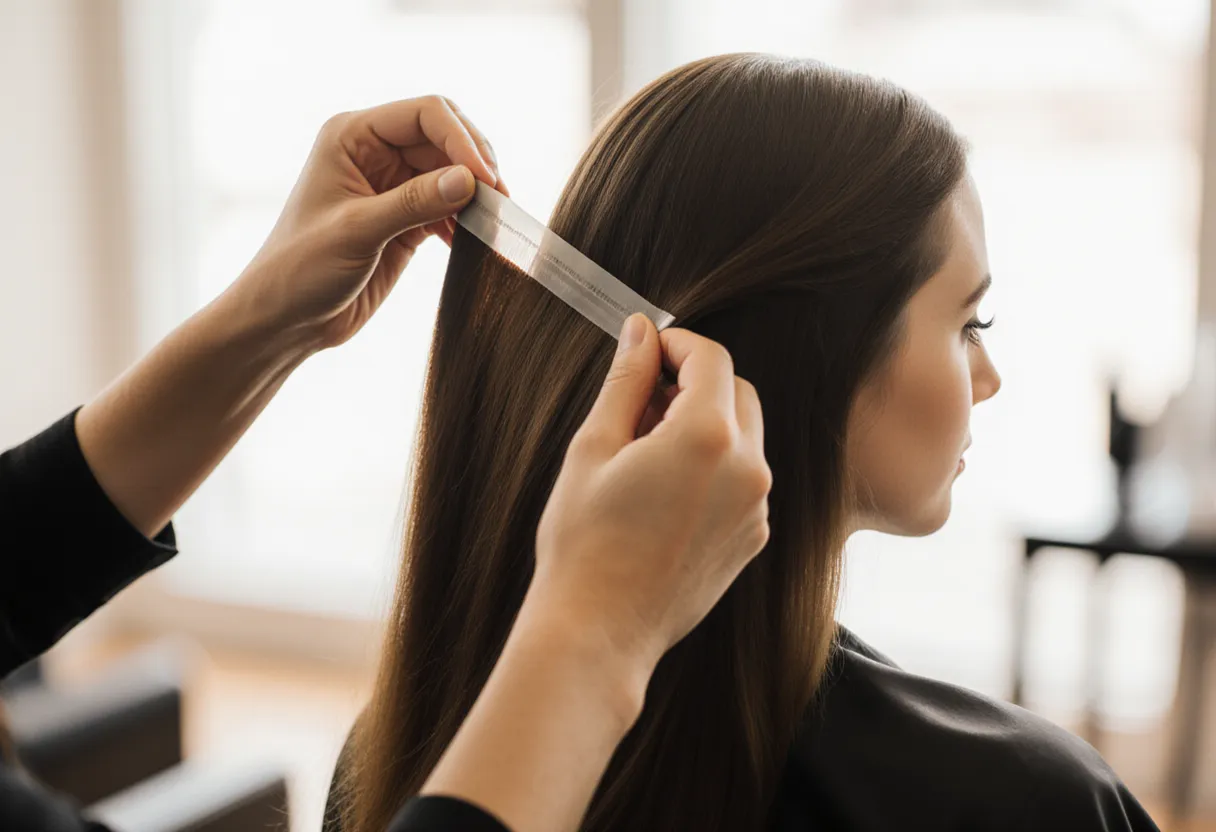
Tape-in hair extensions are thin wefts sandwiched to either side of a small section of your own hair with medical-grade adhesive. They lie completely flat, which makes them one of the most natural-looking semi-permanent methods.
- Best for: fine to medium hair that needs seamless volume.
- Wear time: 6–8 weeks before a move-up appointment.
- Upkeep: moderate; the same tapes can be re-taped and reused for several cycles.
Tape-ins are my go-to recommendation for clients who want everyday length without heavy bonds, and they're fast to apply.
Sew-In (Weave) Extensions
A sew-in involves braiding your natural hair into cornrows, then stitching wefts onto the braids with a needle and thread. No heat or glue touches your hair.
- Best for: thick, coarse, or curly hair types.
- Wear time: 6–8 weeks.
- Upkeep: moderate; protect the braids and keep the scalp clean.
Fusion / Keratin-Bond Extensions
Fusion extensions (also called keratin-bond or pre-bonded) attach individual strands to your hair using a keratin adhesive warmed to a soft bond. They're the most long-lasting and natural-moving option because each tiny bond moves independently.
- Best for: clients wanting the most permanent, undetectable result.
- Wear time: 3–4 months.
- Upkeep: higher investment, but unmatched longevity and movement.
Micro-Link (Bead) Extensions
Micro-link extensions thread small wefts or strands through a tiny silicone-lined bead that's clamped shut — no heat and no glue. They're a great middle ground for damage-conscious clients.
- Best for: people who want a reusable, adhesive-free method.
- Wear time: 6–8 weeks before tightening.
Halo Extensions
A halo is a single weft attached to a clear, adjustable wire that rests on your head like a crown, hidden under your top layer of hair. You place it yourself in seconds.
- Best for: quick at-home volume with zero attachment to your roots.
- Upkeep: the lowest of any method — nothing is bonded to your hair.
How to Choose the Right Method for You
When clients sit in my chair at our Los Angeles salon, I'm weighing four things to recommend the right type:
- Your hair type and density — fine hair needs flat, lightweight bonds like tape-ins; thick hair can carry sew-ins or fusion.
- Your goal — length, volume, or a color effect like hidden dimension.
- Your lifestyle — how much daily styling and salon maintenance you'll realistically keep up with.
- Your budget — both the install and the upkeep over time.
Want to add length and brighten your look? Many clients pair extensions with color — read our guide to partial highlights to see how dimension and length work together. A consultation is the best way to land on the perfect plan for your hair.
What Do Hair Extensions Cost?
Hair extensions cost varies widely based on the method, the amount of hair, and the quality. Clip-ins are the most affordable since there's no application fee, while fusion and tape-in sets cost more because they include premium Remy hair plus the stylist's application time. Move-up and maintenance appointments are a recurring cost to plan for, too. Because every head is different, we always quote extensions after an in-person consultation — that way you know exactly what you're investing in before you book.
Caring for Your Extensions
No matter which of the types of hair extensions you choose, the right aftercare protects your investment:
- Use a sulfate-free, gentle shampoo and a hydrating conditioner from mid-shaft to ends.
- Brush with a looping or soft-bristle extension brush, holding the roots to avoid tugging bonds.
- Always dry the bonds fully and never sleep on wet extensions.
- Sleep with hair in a loose braid and a silk pillowcase to prevent tangling.
- Keep your move-up appointments so bonds don't grow out and matte.
Frequently Asked Questions
Do hair extensions damage your natural hair? When applied by a trained stylist and removed properly, quality extensions shouldn't damage your hair. Damage usually comes from DIY application, skipped maintenance, or leaving bonds in too long. That's why professional application and timely move-ups matter.
How long do hair extensions last? It depends on the method. Clip-ins and good Remy wefts can last 6–12 months with care, tape-ins are re-used for several cycles, and fusion bonds stay in for 3–4 months before a refresh. The hair itself outlasts the bond.
Can you color hair extensions? Remy human hair extensions can be toned or darkened by your colorist, but lightening is risky and best left to a professional. We always recommend coloring before or during a custom match rather than at home.
Which extensions are best for fine or thin hair? Tape-in and micro-link extensions are usually best for fine hair because they distribute weight evenly and lie flat against the scalp, keeping everything discreet and comfortable.
How long does it take to put in extensions? Clip-ins and halos take minutes at home. In the salon, tape-ins are among the fastest, while a full head of fusion strands can take a couple of hours. Your stylist will give you a time estimate at your consultation.
Ready to Transform Your Look?
Choosing between the types of hair extensions is so much easier with an expert in your corner. Whether you're after subtle volume or a head-turning length change, our team at The Look Hair Salon will match the method, color, and hair to your goals — and show you how to keep it gorgeous between visits. Serving Glendale, Burbank, Eagle Rock, and greater Los Angeles. Book your extension consultation today and let's create your perfect look.
Filed under
Written by
The Look Hair Salon
Stylist at The Look Hair Salon — bringing this story to you from our chairs in Glendale.
Ready for your next look?
Pick a stylist + time online. We'll handle the rest.
Walk-ins welcome, but online bookings get our fastest confirmation.