Color Trends
Ombre Hair Color: A Stylist's Guide
Ombre hair color gives you dark roots melting into bright ends - dimension with almost no grow-out line. A Glendale stylist explains the technique, upkeep, and cost.
Ombre Hair Color: A Stylist's Guide
If you've ever wanted lighter ends without committing to lightening your whole head, ombre hair color is the technique you're looking for. It's the gradient look — darker at the root, brighter at the ends — and when it's done well, it grows out beautifully instead of leaving you with a hard line. Here's everything we tell clients at our hair salon in Glendale before they sit down in the chair.
What Is Ombre Hair Color?
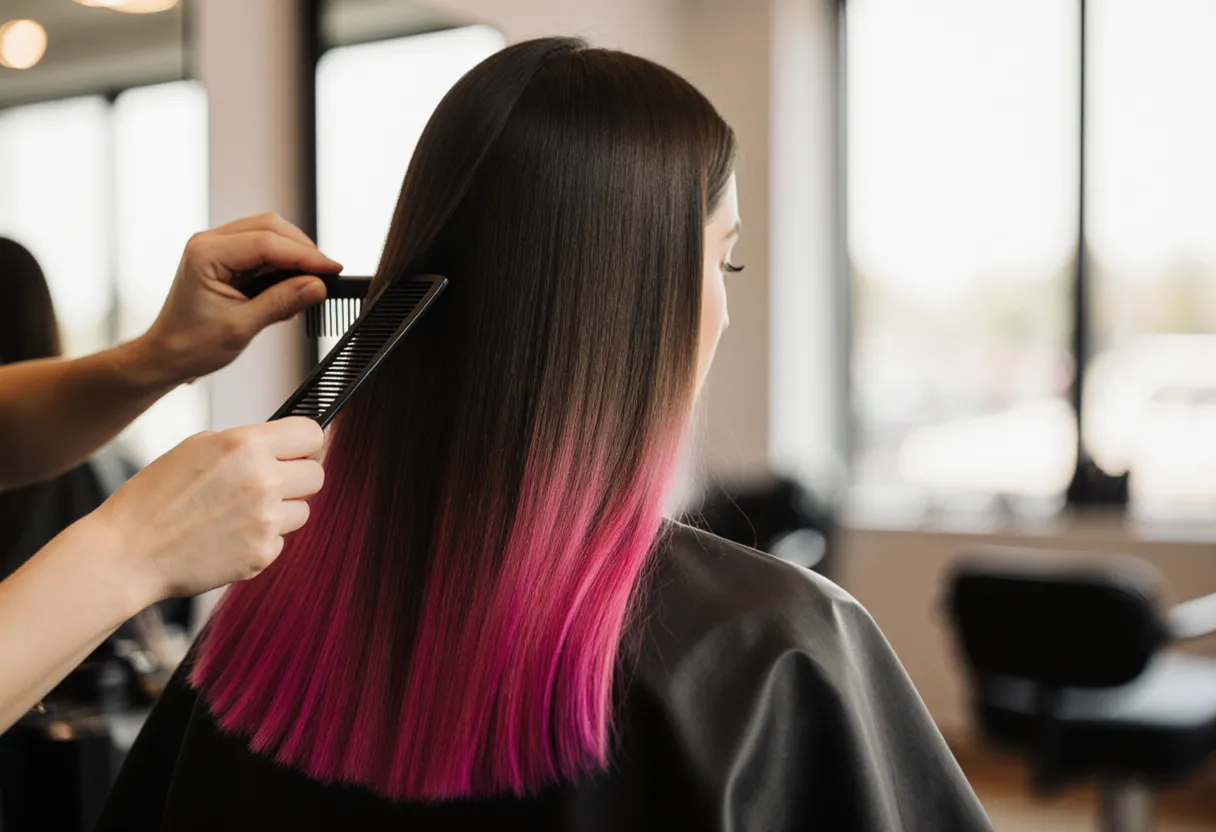
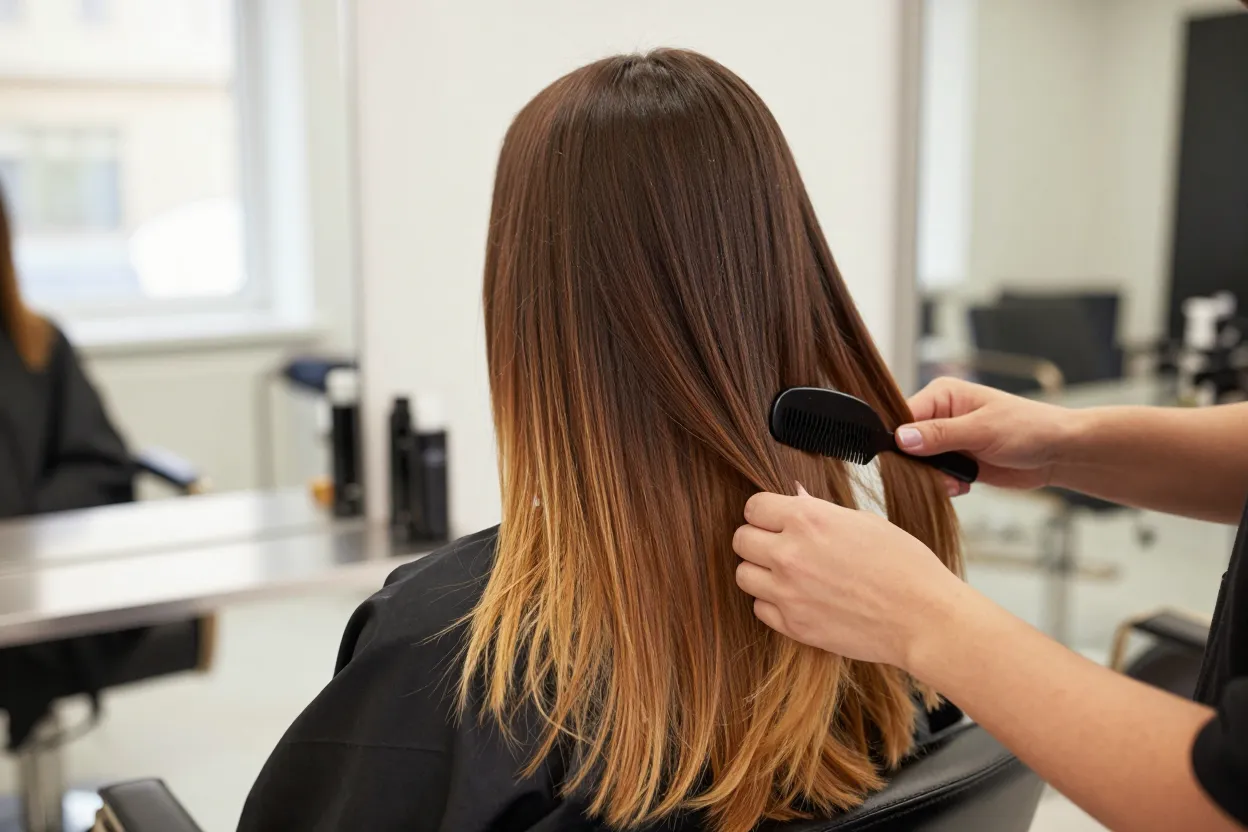
Ombre is a French word that means "shaded," and that's exactly what the technique does. Your natural or base color stays at the roots, then transitions gradually into a lighter tone toward the ends. The lightener is applied in a horizontal band and blended upward, so the eye reads it as a smooth fade rather than two separate colors.
A few things define a true ombre:
- The root stays dark. Usually your natural level, sometimes deepened a touch for contrast.
- The lightest point is at the ends. Mid-lengths carry the blend.
- The transition is horizontal, not scattered through the hair.
- Grow-out is nearly invisible, because there's no line at the scalp to begin with.
That last point is why ombre hair color has stayed popular for well over a decade. It's low-maintenance color in the truest sense — you can go three to five months between appointments without it looking neglected.
Ombre vs. Balayage vs. Sombre
These three get used interchangeably online, and they shouldn't be. Here's the honest breakdown:
- Ombre is a placement — a horizontal gradient from dark roots to light ends.
- Balayage is a technique — hand-painted, sweeping strokes that create scattered, sun-kissed brightness throughout the hair. It doesn't have to be a gradient at all.
- Sombre hair ("soft ombre") is a subtler version of ombre, with only two or three levels of lift and a very gentle fade. It's the most natural-looking of the three.
Plenty of stylists — us included — use balayage strokes to create an ombre gradient. The two aren't mutually exclusive. If you're still sorting out the vocabulary, our guide to balayage vs. highlights breaks down the difference in more detail.
Reverse ombre flips the whole thing: light at the roots, darker toward the ends. It's a bolder, more editorial choice, and it does require more upkeep since your natural regrowth will show at the scalp.
Who Ombre Hair Color Looks Best On
Almost everyone, honestly — but the version changes.
If you're a brunette
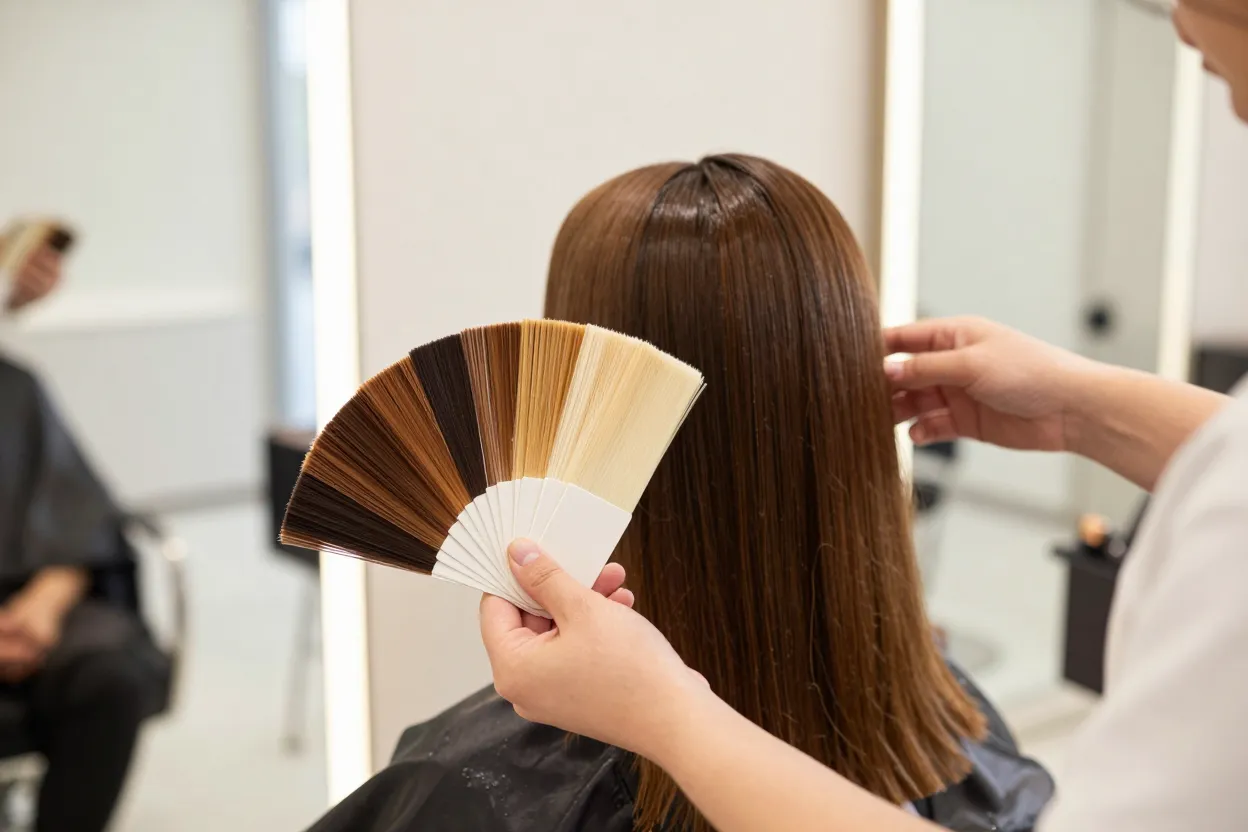
Ombre hair color for brunettes is the classic. Deep espresso or chestnut roots melting into caramel, honey, or bronde ends reads warm and expensive without a dramatic change. If your skin has cool undertones, we'll steer the ends toward a mushroom or beige tone instead of gold.
If you're already blonde
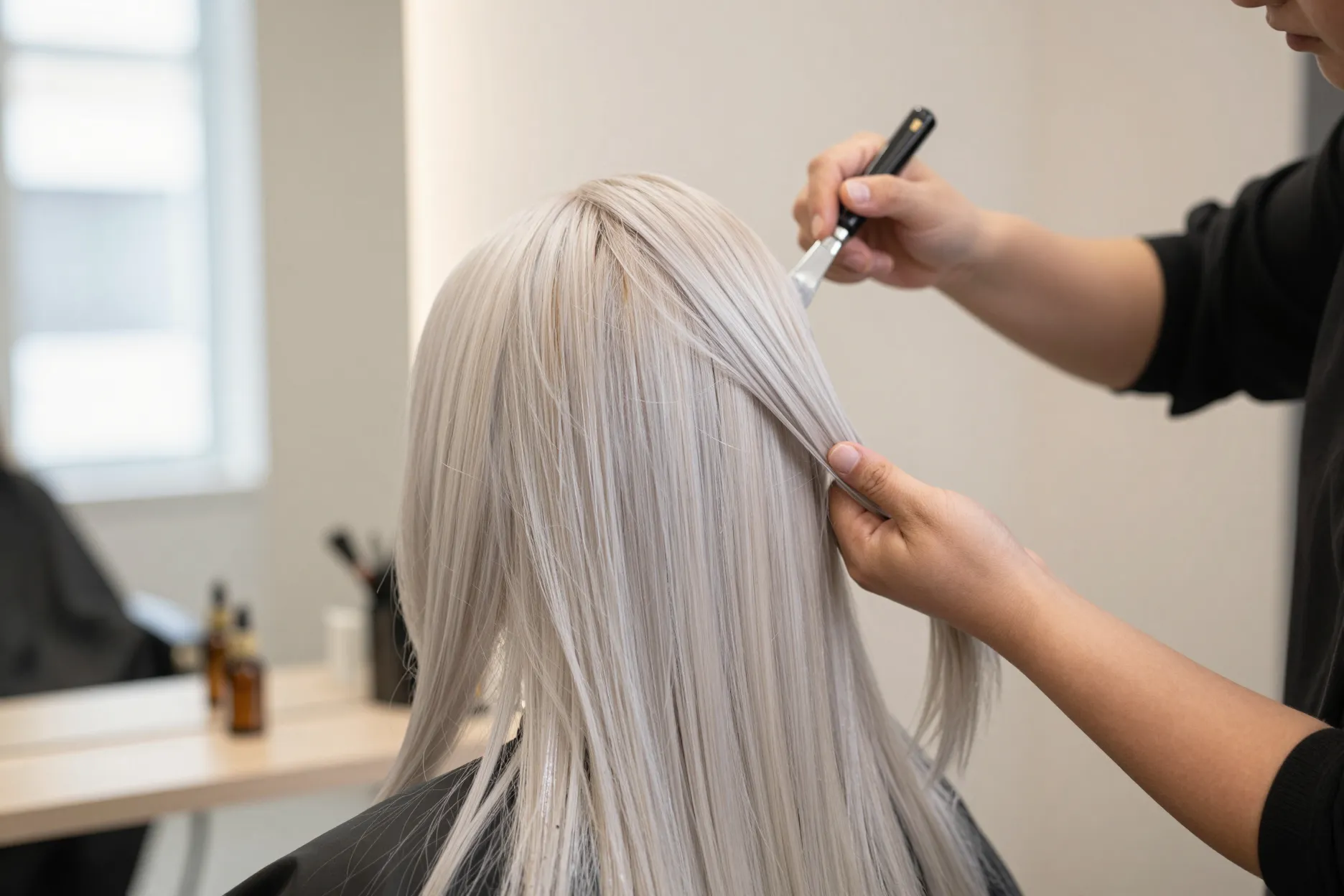
A shadow root or root smudge at the base creates the gradient in reverse of what you'd expect — we darken slightly at the top rather than lightening the ends further. It softens harsh regrowth and adds dimension.
If your hair is dark and coarse
Ombre is genuinely one of the smartest options for very dark hair, because the lightener never touches the scalp. That said, dark hair lifts through warm stages — red, orange, gold — and getting to a clean, cool end result may take more than one session. Rushing it is how ends get compromised.
If you have curls or waves
Ombre and curls are a beautiful match. Curl pattern breaks up the gradient naturally, so the transition looks even softer. We'll place the lightening a little higher than we would on straight hair, because curls shrink and the brightness can otherwise disappear.
What Happens at Your Appointment
Here's the actual process, start to finish.
- Consultation. We look at your natural level, your hair's condition, any existing color, and the photos you brought. We talk about how light you actually want to go and how many sessions that will realistically take.
- Sectioning and placement. We map where the gradient should begin — usually somewhere between the jaw and the collarbone, depending on your length and face shape.
- Lightening. The lightener is applied and feathered upward so there's no hard edge. Bond-building additives go into the mix to protect the hair's internal structure during lift.
- Processing and rinse. Timing is watched closely, not set and forgotten.
- Toning. This is the step that decides whether your ombre looks expensive or brassy. A gloss or toner neutralizes unwanted warmth and sets the exact tone — beige, champagne, caramel, ash.
- Cut and style. A fresh trim on the ends makes the gradient read cleanly.
Plan on three to four hours for a first-time ombre on dark hair, less for a refresh or a sombre.
Keeping Ombre Hair Color Looking Fresh
Lightened ends are more porous than the rest of your hair, which means they lose tone and moisture faster. A few habits make a real difference:
- Wash less, and cooler. Hot water opens the cuticle and pulls tone out.
- Use a color-safe, sulfate-free shampoo. Harsh detergents strip toner within weeks.
- Add a weekly mask focused on the mid-lengths and ends — that's where the lift happened.
- Purple or blue shampoo once a week if your ends are blonde or beige, to counter brassiness. Once a week — not every wash, or you'll go dull.
- Heat protectant, every time. Los Angeles sun plus a flat iron is a fast way to fry lightened ends.
- Book a gloss between full appointments. A toning refresh every 8–10 weeks keeps the color true for a fraction of the time and cost of a full service.
We see clients from all over the area — Eagle Rock, Burbank, Pasadena, Silver Lake — and the ones whose ombre still looks great at month four are almost always the ones glossing in between.
Frequently Asked Questions
How much does ombre hair color cost? It depends on length, density, and how far you're lifting. A sombre or refresh on mid-length hair sits at the lower end; a first-time ombre on long, dark hair that includes lightening, toning, and a cut costs more. We give a firm quote at consultation, before anything is mixed — no surprises at the register.
How long does ombre hair last? The gradient itself lasts as long as your hair does — there's no root line to chase. The tone is what fades, typically over 8–12 weeks. Most clients come in for a gloss every couple of months and a full service twice a year.
Is ombre bad for your hair? Any lightening service changes the hair's structure, so the answer is really about how it's done. Because ombre keeps lightener off the scalp and concentrates the work on the ends, it's gentler than an all-over blonde. Bond-building additives during the service and consistent conditioning afterward keep the ends strong.
Can I do ombre hair at home? You can, but the two things that make ombre look professional — a truly seamless blend and correct toning — are also the two hardest things to do in a bathroom mirror. Home kits tend to leave a visible band and brassy ends. Correcting that costs more than the original service would have.
What's the difference between ombre and balayage again? Ombre is the shape of the color (dark roots to light ends, blended horizontally). Balayage is the painting method. A stylist can absolutely use balayage strokes to build an ombre.
Ready to Try Ombre?
Ombre hair color is the rare service that's both a real change and genuinely easy to live with — dimension you'll notice in every photo, without a root touch-up every six weeks. If you're in Glendale, Los Angeles, or anywhere nearby and you've been saving gradient photos to your camera roll, bring them in. We'll look at your hair honestly, tell you what's possible in one session versus two, and build a plan around it.
Book your ombre consultation at The Look Hair Salon in Glendale — we'll take it from there.
Filed under
Written by
The Look Hair Salon
Stylist at The Look Hair Salon — bringing this story to you from our chairs in Glendale.
Ready for your next look?
Pick a stylist + time online. We'll handle the rest.
Walk-ins welcome, but online bookings get our fastest confirmation.