Color Trends
Hair Color Correction: A Stylist's Guide
A hair color correction fixes box dye, brassiness, and banding without wrecking your hair. A Glendale stylist explains the process, cost, and timeline.
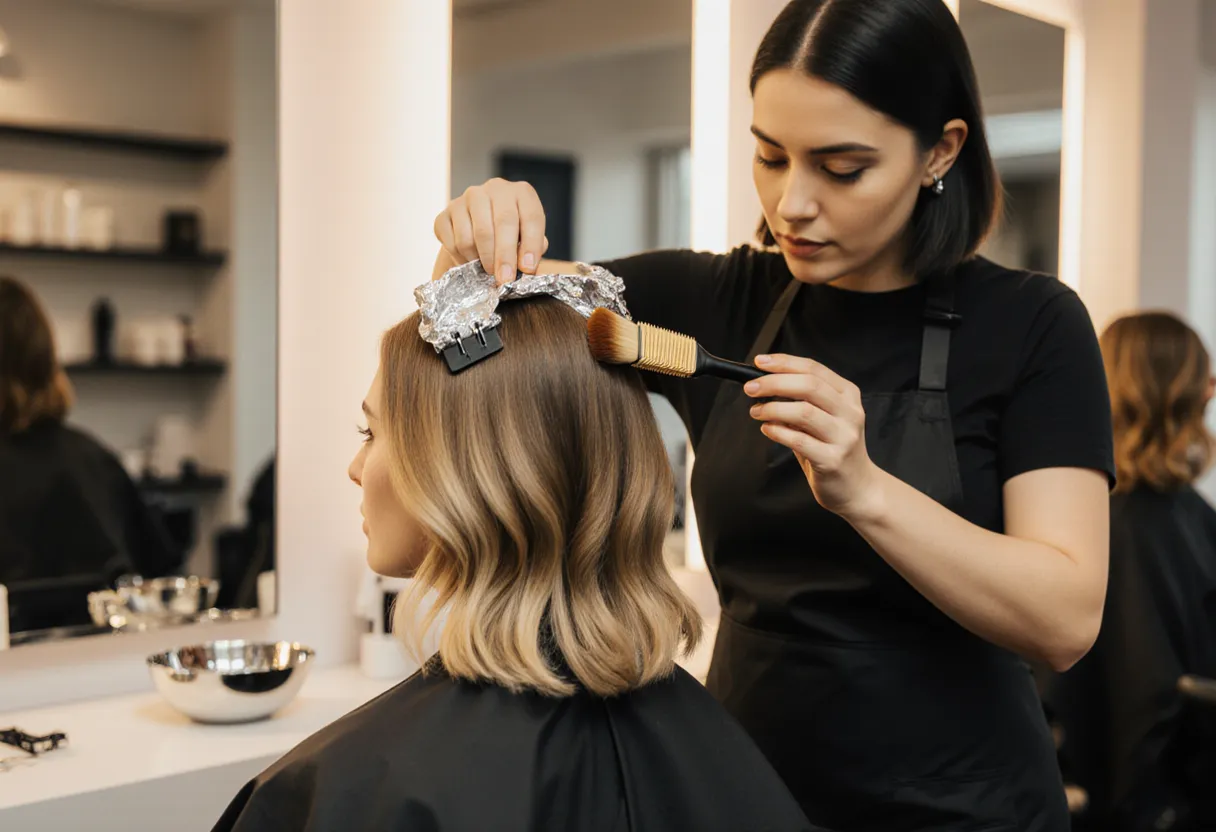
Hair Color Correction: A Stylist's Guide
If you're staring at orange roots, muddy ends, or a shade that looked nothing like the photo you saved, you're already thinking about hair color correction. It's the service we do most often for people who tried a box dye at home or walked out of an appointment with a result that just wasn't it. The good news: almost every color disaster is fixable. The honest news: it takes more time, more skill, and more patience than a regular color appointment — and knowing that up front changes everything about how the day goes.
Here's what a color correction actually is, how we approach it at our hair salon in Glendale, and what you should expect before you book.
What Is a Hair Color Correction?
A color correction is any service where a stylist is removing, neutralizing, or rebuilding existing artificial pigment instead of simply adding new color to virgin hair. Regular color is additive. Correction is subtractive and diagnostic — we have to figure out what's already sitting on the strand before we can decide what goes on next.
That distinction matters because it explains the price and the timeline. A root touch-up is a known quantity. A correction is detective work. We're dealing with:
- Layered pigment from months or years of overlapping applications
- Uneven porosity — damaged sections grab color faster than healthy ones
- Banding, where roots, mids, and ends read as three different shades
- Underlying warmth exposed by lifting, which is where the orange and brassy tones come from
Common reasons people book color correction hair services: box dye gone wrong, at-home bleach, a black dye they now regret, faded fashion colors like blue or green, brassiness after highlights, or growing out an old ombre that no longer suits them.
How Stylists Actually Fix Hair Color
Step 1: The consultation and strand test
Nothing gets applied until we've looked at your hair dry, under natural light, and asked a lot of questions. What products have touched your hair in the last year? Any henna or metallic-salt dyes (those react badly with lightener and we have to know)? How much length are you willing to lose?
We'll often do a strand test on a hidden section. It tells us how fast your hair lifts and whether it can handle what we're planning. It's five minutes that prevents a very bad afternoon.
Step 2: Removing or neutralizing what's there
Depending on the situation, we'll reach for one of a few tools:
- Color remover — a reducing agent that shrinks artificial dye molecules so they rinse out. Gentler than bleach. Great for lifting old box dye off mid-lengths.
- Lightener with a low-volume developer — slow, controlled lift when we need to go past what remover can do.
- Toner or gloss — the color wheel does the heavy lifting here. Blue neutralizes orange, purple neutralizes yellow, green neutralizes red. This is how we kill brassiness without lifting further.
- Filling — going darker after over-lifting means putting warmth back in first, or the result turns muddy green-grey. Skipping the filler is the single most common at-home mistake.
If you want to understand the numbers we're talking about during this part of the appointment, our guide to hair color levels breaks down the 1–10 scale we're using.
Step 3: Rebuilding the tone
Once the canvas is even, we build the shade you actually want — usually with a demi-permanent gloss rather than a permanent color, because it's gentler and it lets us adjust at your next visit.
How Much Does a Hair Color Correction Cost?
Most salons, including ours, price correction by the hour rather than by the service, because no two are the same. A minor brassiness fix might be a single 90-minute appointment. A black-box-dye-to-blonde transformation is realistically three to four sessions spread over several months.
What drives the price:
- Hair length and density — more hair, more product, more time
- How many layers of old color are on the strand
- How far you're going from where you are now
- Whether bond-building treatments are needed throughout the process
We'll always quote you a range at consultation before anything starts. If a salon promises a dramatic color correction hair salon transformation in two hours for a flat rate, be skeptical — that's usually how hair breaks.
Can You Fix It Yourself at Home?
Some things, yes. Most things, no.
Reasonable at home:
- A purple or blue shampoo to soften mild brassiness between visits
- A conditioning mask to improve porosity before your appointment
Not reasonable at home:
- Applying more dye over the problem (this is the #1 way a small correction becomes a big one)
- Bleach on already-lightened hair
- Using a "color stripper" without knowing what dye is underneath
The pattern we see constantly at our Los Angeles salon: someone tries to fix orange hair with a dark box dye, it grabs unevenly, and now we're correcting two problems instead of one. If you've already made it worse — genuinely, don't be embarrassed. Half our correction clients start the consultation with an apology. We just need to know what's on there.
What to Expect on the Day
Block out the whole afternoon. Bring headphones, a snack, and a charger. Bring reference photos — including photos of what you don't want, which are often more useful than the ones you do.
And come in with a realistic frame: the goal of session one is usually healthy and even, not finished. A stylist who tells you your hair needs a second appointment isn't upselling you. They're protecting the hair you still have.
Between sessions, we'll usually recommend:
- Sulfate-free shampoo to slow fading
- Heat protectant every single time, no exceptions
- A weekly bond or protein treatment, depending on what your hair is missing
- Cooler water on the rinse
Frequently Asked Questions
What is a hair color correction? It's a service where a stylist removes, neutralizes, or rebuilds existing artificial hair color rather than simply applying new color. It's used to fix box dye, brassiness, banding, uneven tone, or unwanted fashion colors.
How long does a color correction take? Anywhere from 90 minutes for minor toning to 5+ hours for a major transformation — and dramatic changes often need two to four sessions spaced several weeks apart.
Does color correction damage your hair? Any lightening carries some risk, which is exactly why we work in stages, use low-volume developers, and build bond treatments into the process. A well-planned correction is far less damaging than repeated at-home attempts.
How do you fix orange hair? Orange is exposed underlying warmth. We neutralize it with a blue-based toner or gloss, and if the hair hasn't lifted far enough, we lift gently first, then tone. Blue shampoo helps maintain it, but it won't fix a significant orange cast on its own.
How soon can I get a correction after coloring my hair? Ideally, wait at least two weeks and don't apply anything else in the meantime. If your hair feels gummy or is breaking, come in for a consultation right away instead — we may treat before we color.
Book a Color Correction Consultation
If you've been hiding your hair in a bun for a month, let's fix it. We see clients from Glendale, Eagle Rock, Burbank, Pasadena, and across Los Angeles for hair color correction every week, and we start every one with a free, honest consultation — including telling you if we think you should wait. Book your consultation and bring your photos. We'll build you a plan that gets you there without sacrificing your hair to do it.
Filed under
Written by
The Look Hair Salon
Stylist at The Look Hair Salon — bringing this story to you from our chairs in Glendale.
Ready for your next look?
Pick a stylist + time online. We'll handle the rest.
Walk-ins welcome, but online bookings get our fastest confirmation.