Color Trends
Gray Blending: A Stylist's Guide
Gray blending disguises silver strands with soft highlights and lowlights for low-maintenance, dimensional color. A Glendale stylist explains how it works.
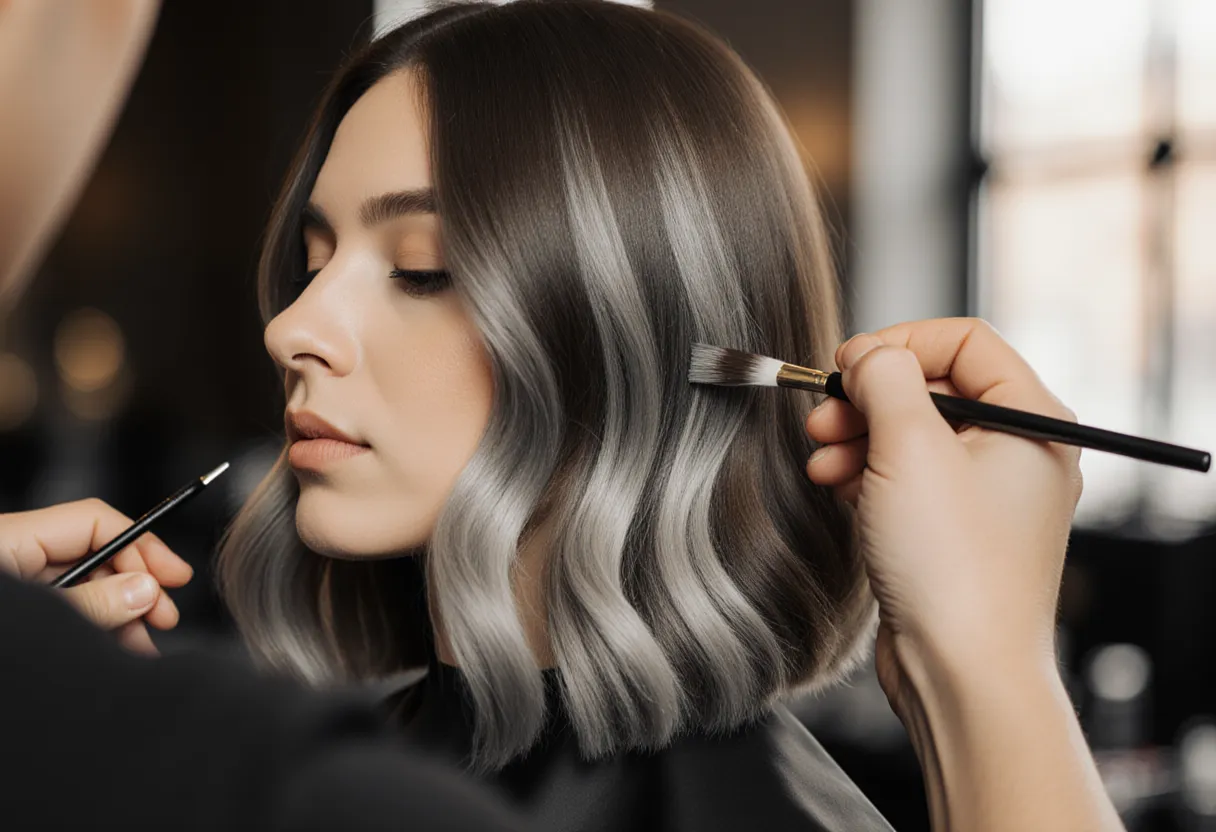
Noticing more silver strands at your temples but not ready to commit to full-time root touch-ups every three weeks? Gray blending might be the low-maintenance answer you've been looking for. As stylists at our hair salon in Glendale, it's one of the most-requested color services we do — and one of the most misunderstood.
Gray blending softens and disguises grays instead of fully covering them, so your color grows out gracefully and your grays become a feature rather than a flaw. Below, we'll walk you through exactly what gray blending is, how it differs from traditional gray coverage, the techniques we use, and how to keep it looking fresh here in Los Angeles.
What Is Gray Blending?
Gray blending is a color technique that uses strategically placed highlights, lowlights, and toners to weave your grays into your natural color rather than painting over every strand. The goal isn't to erase the gray — it's to make it blend in so seamlessly that new growth is far less obvious.
Think of it this way: traditional permanent color creates a solid, opaque wall of pigment. When your roots grow, you get a sharp line of demarcation — that telltale silver stripe along your part. Gray blending, by contrast, creates dimension. By mixing lighter and darker tones through the hair, there's no single hard line for the eye to catch, so grays "disappear" into a soft, multi-tonal finish.
If you've ever wondered what gray blending is versus solid color, the simplest answer is this: coverage hides, blending disguises. And for a lot of our Glendale clients, disguising is exactly what they want.
Gray Blending vs. Full Gray Coverage
Both services have their place. Choosing between them comes down to how much gray you have and how much upkeep you want.
Full gray coverage is usually the right call when:
- You're more than about 50–70% gray
- You want a uniform, single-shade result
- You prefer your hair to read as one solid color with no visible silver
Gray blending tends to be the better fit when:
- You're in the early-to-middle stages of going gray (roughly 10–50%)
- You want to stretch the time between salon visits
- You love the idea of natural-looking dimension rather than flat, opaque color
- You're trying to grow out box dye or transition toward embracing your silver down the road
Many clients actually use gray blending as a bridge. It lets you soften grays now while keeping the option open to fully transition to silver later — without a jarring "chop it all off" moment.
How Gray Blending Works: The Techniques
There's no single formula — a great result comes from combining a few methods based on your hair. Here's what we typically reach for.
Highlights and Lowlights
Fine highlights placed around the face and through the top layers mimic the way grays naturally catch the light, so silver strands read as intentional brightness instead of aging. We then add lowlights — a few shades deeper — to restore richness and keep the color from looking washed out. Blending gray hair with highlights and lowlights together is what creates that believable, dimensional effect. (If you're curious how depth is built into color, our guide to lowlights for hair breaks it down.)
Balayage for Gray Blending
Hand-painted balayage is a gray-blending favorite because it grows out with zero harsh lines. Soft, sun-kissed sweeps diffuse the grays and give a lived-in finish that's forgiving for months. If you're new to the technique, our complete balayage guide is a great primer.
Toners and Glosses
A finishing toner or gloss ties everything together, knocks out any brassiness, and adds shine so the whole blend looks polished and cohesive rather than stripey.
Who Is Gray Blending Right For?
Gray blending is wonderfully versatile, but it shines brightest for:
- Anyone in the early stages of graying who wants to buy time before deciding on full coverage
- Brunettes going gray, where the contrast between dark hair and silver is most obvious
- Busy people across Los Angeles who can't get to the salon every three weeks
- Clients growing out box dye who need a softer path back to natural
- Anyone craving dimension rather than a flat, one-note color
Whether you're commuting from Pasadena, Burbank, or Eagle Rock, if you find yourself frustrated by how quickly your roots announce themselves, gray blending is worth a conversation with your colorist.
Gray Blending Upkeep and Cost
Here's the best part: gray blending is designed to be low-maintenance. Because there's no hard root line, most clients can go 8–12 weeks between appointments — roughly double the interval of solid coverage.
To keep your blend looking its best at home:
- Use a sulfate-free, color-safe shampoo to protect your tones.
- Add a purple or blue toning product if your grays trend brassy — it keeps silvers crisp and cool.
- Book a gloss refresh between full appointments to revive shine and tone.
- Protect from heat and sun — this is L.A., after all — with a leave-in that has UV protection.
Cost varies with your hair length, density, and how much dimension you want, since gray blending often combines highlights, lowlights, and a toner in one visit. The upside is that fewer appointments per year often makes it gentler on your calendar and your budget over time.
Frequently Asked Questions
Is gray blending the same as highlights? Not quite. Highlights are one of the tools we use for gray blending, but true gray blending combines highlights, lowlights, and toning specifically to disguise silver strands and create seamless dimension.
How much gray can gray blending handle? It works beautifully up to roughly 50% gray. Beyond that, most people are happier with full gray coverage, though your stylist can assess your exact ratio in person.
Will gray blending completely hide my grays? It disguises them rather than fully covering them. You may still spot the occasional silver up close — but from a normal distance, the grays melt into your color and grow out softly instead of as a visible line.
How often will I need to come in? Most gray-blending clients return every 8–12 weeks, which is one of the biggest reasons the service is so popular with our busy Glendale and Los Angeles clients.
Can I switch to full silver later? Absolutely. Gray blending is one of the gentlest ways to start a full silver transition, because it gradually reduces the contrast between your colored hair and your natural gray.
Ready to Soften Your Grays?
If you're tired of chasing your roots and want color that grows out gracefully, gray blending could be your perfect match. Our colorists at The Look Hair Salon in Glendale will assess your gray pattern, hair history, and lifestyle to build a custom blend that looks effortless and lasts. Book your appointment today and let's make those grays work for you, not against you.
Filed under
Written by
The Look Hair Salon
Stylist at The Look Hair Salon — bringing this story to you from our chairs in Glendale.
Ready for your next look?
Pick a stylist + time online. We'll handle the rest.
Walk-ins welcome, but online bookings get our fastest confirmation.