Styling Guides
French Bob: A Stylist's Guide
The french bob is the chin-length, blunt, bang-forward cut everyone's asking for. A Glendale stylist explains who it suits and how to style it.
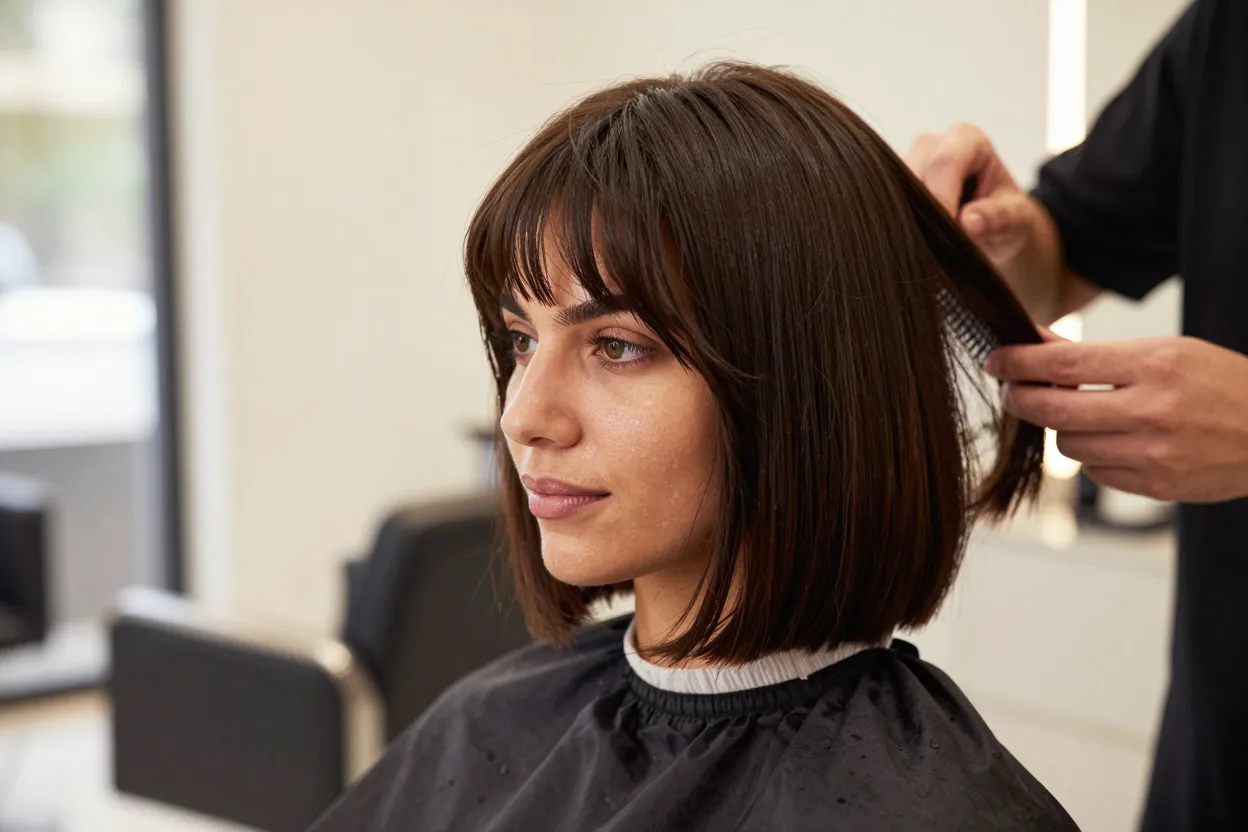
The french bob is the haircut clients bring us on their phone more than almost any other short shape — that chin-length, slightly blunt, effortlessly undone bob that looks like it was cut in a Paris apartment and never styled again. And that's exactly the tension: it photographs as the easiest haircut in the world, but a french bob only looks that easy when the length, the weight and the bangs are cut to your face. Get one of those wrong and it reads costume-y instead of chic.
Here's everything we tell clients in the chair at our hair salon in Glendale before we pick up the shears.
What Is a French Bob, Exactly?
A french bob is a short, blunt-ish bob that sits somewhere between the jawline and the very top of the collarbone, almost always paired with a fringe. The classic version hits right at the chin with a soft, slightly wispy bang.
Three things define it:
- Length at the chin (or just below). Traditionally the french bob stops at the widest part of the jaw. Modern versions creep down to the mouth of the collarbone — that's the "long french bob."
- A blunt-ish perimeter. The bottom line is clean and strong, not heavily layered or over-thinned. Weight at the ends is what gives the cut its shape.
- Some form of bangs. A soft full fringe, a wispy French fringe, or curtain bangs. The bang is what makes it French rather than just "a bob."
What it is not: a heavily graduated, stacked, or A-line bob. The french bob hairstyle is deliberately one-length-ish and a little imperfect. That's the whole point.
French Bob vs. Italian Bob vs. a Regular Bob
This comes up constantly, so let's settle it.
The French Bob
Chin-length, blunt perimeter, bangs, minimal internal layering. Slightly undone, a little "I woke up like this." Air-dried texture is welcome.
The Italian Bob
Usually a touch longer — grazing the jaw to just under it — with more movement and a rounder, glossier, blown-out finish. Bangs are optional. Where the french bob is nonchalant, the Italian bob is polished.
A Classic Bob
Can be any length from ear to collarbone, often graduated or stacked at the back, and frequently bang-free. If you want to compare the shapes side by side, our short bob haircut guide breaks down the full family of bob lengths and how each one behaves.
The short version: french = blunt plus bangs plus attitude. Italian = softer, longer, more polished.
Who a French Bob Actually Suits
Almost everyone, with adjustments. Here's how we tailor it.
Fine Hair
A fine hair french bob is one of our favorite cuts to give, because the blunt line is doing all the heavy lifting. Removing length concentrates the density you have into a shorter, thicker-looking perimeter. Rules we follow:
- Keep the line genuinely blunt — no point-cutting the ends into oblivion
- Keep internal layering to a minimum (or skip it)
- Use a wispy fringe rather than a heavy one so the bang doesn't steal density from the top
Thick or Coarse Hair
Thick hair can absolutely wear a french bob, but it needs internal weight removal or it turns triangular. We debulk from the inside — invisible layers, subtle undercutting at the nape — while keeping the outside line clean.
Wavy and Curly Hair
Yes. Cut dry, cut to the curl pattern, and add about an inch of length to account for spring. A curly french bob with a soft curtain fringe is one of the most flattering shapes we do.
Face Shape
- Round face: drop the length slightly below the chin and keep the fringe soft and parted, not blunt across
- Long or oval face: the chin-length french bob with a full fringe is made for you — it visually shortens and widens
- Square jaw: go just past the jaw so the line lands softer, and add a bit of face-framing texture
The Bangs Question
Most people searching "french bob with bangs" versus "french bob without bangs" are really asking one thing: do I have to?
You don't. A bang-free french bob is essentially a blunt chin-length bob — still beautiful, just less overtly French. But if you're bang-curious, you have options:
- Full French fringe — soft, slightly airy, brushing the brows. The most classic.
- Curtain bangs — parted in the middle, longer at the sides, blending into the bob. The lowest-commitment version and the easiest grow-out.
- Micro or baby bangs — high impact, high maintenance, incredible on the right bone structure.
If you're nervous, start with curtain bangs. They can be cut shorter later; they can't be un-cut.
Styling a French Bob (It Really Is Low Effort)
The goal is texture, not perfection.
- Air-dry method: apply a light mousse or sea-salt mist to damp hair, scrunch gently, let it dry, then bend a few pieces with a flat iron. Two minutes.
- Blow-dry method: rough-dry with your fingers, then use a round brush only on the fringe and the front two sections. Leave the back alone.
- Second-day method: dry shampoo at the roots, a pea-sized amount of texture cream through the mid-lengths, done.
Product-wise, keep it light. Heavy oils and creams collapse the shape a french bob depends on. A texturizing spray and a matte paste are all most of our Glendale and Burbank clients ever need.
Maintenance
Because the shape is built on a clean perimeter, a french bob needs a trim every 6 to 8 weeks — 4 to 5 if you have bangs and want them at brow level. Fringe-only trims between appointments are quick and we're happy to do them.
Frequently Asked Questions
What is a french bob? A french bob is a chin-length bob with a blunt or near-blunt perimeter and some form of fringe, styled with an intentionally undone texture. It's shorter and less layered than most classic bobs.
How do you style a french bob? Apply a light texture product to damp hair, air-dry or rough blow-dry, then bend a few random pieces with a flat iron for movement. Round-brush only the fringe. Avoid heavy oils that weigh the shape down.
Does a french bob have layers? Minimal ones, if any. The classic version is essentially one length so the ends stay strong. Thicker hair gets invisible internal layers for weight removal, but the outside line stays blunt.
Is a french bob good for fine hair? It's excellent for fine hair. The blunt line makes the ends look denser, and removing length redistributes the density you already have. Keep the fringe wispy rather than heavy.
How is a french bob different from an Italian bob? The french bob is shorter, blunter, almost always has bangs, and is worn undone. The Italian bob is slightly longer, has more movement, is usually bang-free, and is styled smooth and glossy.
Ready for the Chop?
The difference between a french bob that you love and one you regret is almost entirely in the consultation — where the length lands on your jaw, how heavy your fringe should be, and how your hair actually behaves when you leave the salon. That's a conversation, not a photo.
We cut a lot of french bobs at our hair salon in Glendale, and clients drive in from Eagle Rock, Pasadena, Silver Lake and across Los Angeles for short, precision shapes. Bring your inspiration photos, bring your honest styling habits, and we'll build the version that works for your hair. Book your appointment and let's find your line.
Filed under
Written by
The Look Hair Salon
Stylist at The Look Hair Salon — bringing this story to you from our chairs in Glendale.
Ready for your next look?
Pick a stylist + time online. We'll handle the rest.
Walk-ins welcome, but online bookings get our fastest confirmation.
Keep reading
More from Styling Guides
Wolf Cut: A Stylist's Guide
Aug 31, 2026 · 7 min
 Styling Guides
Hand Tied Extensions: A Stylist's Guide
Aug 29, 2026 · 7 min
 Styling Guides
Bixie Haircut: A Stylist's Guide
Aug 28, 2026 · 7 min
Looking for something specific? Browse every guide we’ve published.